
The Best Bed Rails for Seniors (Minimal + Secure): A Designer’s Guide — and When Not to Use One
This post contains affiliate links. If you buy through them I may earn a small commission at no extra cost to you. How that works.
Part of our complete guide: Bedroom Safety for Aging in Place. I’m a residential interior designer and a full-time caregiver for my parents, not a clinician. Over 15+ years designing homes, I’ve learned that most safety problems are solved by better design long before medical equipment enters the room. Bed rails carry a real entrapment risk for some people, so please read the safety section and involve an OT before buying one. Well Aging Home participates in affiliate programs; if you buy through a link, I may earn a small commission at no extra cost to you.
Best bed rails for seniors: quick answer
If a rail is truly needed, I recommend a short bed assist handle — a half rail such as the Stander EZ Adjust — rather than a full-length rail, and only one that meets the CPSC’s 2023 entrapment standard. But many older adults are better served by correcting bed height to 20–23 inches, adding an adjustable base that raises the head, or installing a floor-to-ceiling support pole. Evaluate entrapment risk first; no rail at all for anyone with dementia or who can’t reposition in bed.
What I tell clients before buying a bed rail
A bed rail — or a bed assist rail, bed support handle, or bed cane; the names vary — does one thing: it gives a hand something to hold when sitting up, turning over, and standing from the edge of the bed. That’s transfer assistance, and it’s the core of senior bed safety and fall prevention in the bedroom. Those are the highest-risk moments of the night, and they happen every night. So I’m not against rails. But I’d tell a client three things before buying one.
First, the bed itself is usually the problem. If the mattress top is too low, the edge too soft, or the person has to lie flat and haul themselves upright, no rail fixes that. A bed at 20–23 inches with a firm edge, on an adjustable base that raises the head so the person is already half-sitting before they swing their legs out, removes most of the need. Fix the bed first; then see if a rail is still needed.
Second, if a rail is needed, it should be a half rail — a handle, not a fence. Full-length rails are hospital equipment. In a home they create the entrapment risk described below and make the bed feel like a crib. What works is a short assist handle at the head of the bed, on the side the person exits, that a hand can reach while lying down.
Third, it should disappear. The best rails fold flat against the mattress side when not in use and hide under a bed skirt or inside an upholstered frame. Real estate agents tell me that a house with visible medical equipment in the primary suite loses the young couple who’d otherwise buy it; the same rule applies to the room your parent lives in now. Think Four Seasons, not hospital.
Think Four Seasons, not hospital
The accessible suite at a Four Seasons doesn’t have a bed rail. It has a bed you can get out of. What that room does instead:
- The mattress is at transfer height — about 20–23 inches — with a firm edge, so sitting on the side and standing is one motion.
- The bed raises its head. Sit up with a button before your feet ever move.
- There’s a solid thing to hold that isn’t a rail: a tall, fixed upholstered headboard, a sturdy nightstand at the right height, and often a chair with arms within reach.
- The floor lights itself when feet touch it, and the route to the bathroom is clear.
- If a rail is requested, it’s a short assist handle in a finish that matches the room, tucked to the mattress side.
That order — bed, then handholds, then a rail only if still needed — is the order below. The short version:
| The problem | What I’d do first |
|---|---|
| Trouble sitting up | Adjustable base that raises the head |
| Trouble standing from the bed | Bed height to 20–23″, firm mattress edge, chair with arms beside it |
| Needs a handhold, nothing attached to the bed | Floor-to-ceiling support pole, or a wall-mounted bar if the bed is against a wall |
| Mild balance issues, can reposition in bed | Short assist handle (half rail) that meets the current standard |
| Rolls out of bed | Low bed, floor mat, concave or edge-support mattress — not a rail |
| Dementia, confusion, or climbs | No rail. Low bed, floor mat, sensor light, and a person |
Safety first: entrapment
This is the section other roundups skip, and it’s the reason I put the bed before the rail. A rail creates gaps: between the rail and the mattress, between the rail and the headboard, under the rail, and between rail bars. A person who slides into one of those gaps — especially someone frail, confused, or unable to reposition — can be trapped by the head, neck or chest. The CPSC identified 284 entrapment deaths involving adult portable bed rails between 2003 and 2021, most of them people over 70; the FDA publishes plain-language recommendations for consumers and caregivers that are worth ten minutes before you buy.
Two practical consequences:
- Buy a rail made to the current standard. Since August 21, 2023, the CPSC’s mandatory safety standard for adult portable bed rails (16 CFR 1270, based on ASTM F3186-17) applies to every rail, assist handle, and transfer pole manufactured for U.S. sale — the definition explicitly includes support poles. Rails made before that date, hand-me-downs, and unbranded imports may not comply. Look for the compliance statement on the box or listing; if it isn’t there, don’t buy it.
- Some people should not have a rail at all. Anyone with dementia or significant confusion, anyone who tries to climb over rails, or anyone who can’t reposition themselves in bed is at higher risk with a rail than without one. For them, the answers are bed height, a low bed with a floor mat, a bedside chair, and a caregiver — not a rail. This is a conversation to have with an OT or the person’s physician.
When a rail is appropriate: it should be a short assist handle, attached firmly between the mattress and base or to the frame (never one that just leans against the bed), with the gap between rail and mattress closed by the rail’s own strap or a firm mattress edge, and the rail checked for looseness every few weeks.
Two other resources: the CDC’s STEADI program for fall-risk assessment, and an occupational therapist — ask your parent’s physician for a home-safety referral; many Medicare Advantage plans and Area Agencies on Aging cover a visit.
Fix the bed before you buy a rail
The cheapest rail is a bed at the right height. Sit on the edge: feet flat on the floor, knees at about 90 degrees, and enough firmness that the edge doesn’t collapse. That’s usually a mattress top at 20–23 inches — measure yours. Then, if sitting up is the hard part, an adjustable base that raises the head means the person is upright before they move. Full guide: best adjustable beds for seniors.

Tempur-Pedic Ergo Smart Power Base
Snore detection, zero-gravity, lumbar support, under-bed lighting. Works with any mattress.
Sit up before you stand — the base is the first ‘rail’
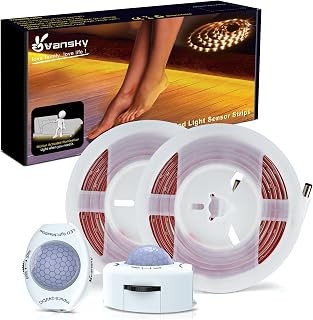
Vansky Motion-Activated Under-Bed Night Light
Soft floor path light for safe nighttime bathroom trips. No installation needed.
Lights the floor before feet touch it
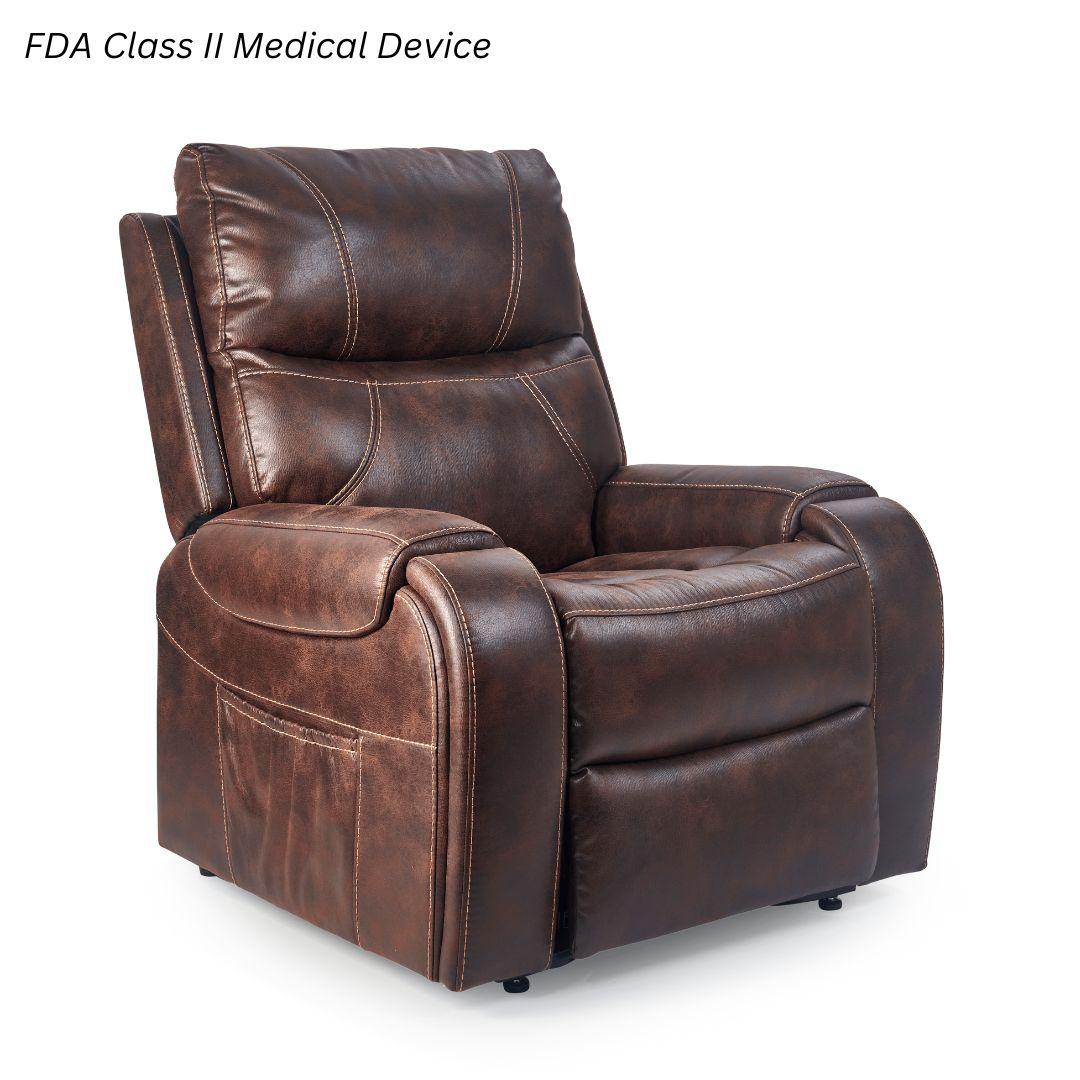
Golden Technologies Titan Lift Recliner
Medium-sized, stylish overstuffed seamed back, plush chaise pad. The least institutional lift chair on the market.
A chair with arms beside the bed — for dressing, and for the nights the bed isn’t the answer
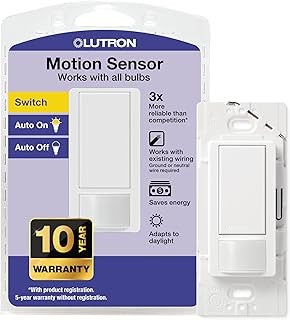
Lutron Maestro Occupancy Sensor
Auto-on, auto-off. Eliminates fumbling for switches in the dark. Non-negotiable for bathrooms and hallways.
Bathroom light on before the hand finds the wall
What I’d choose if a rail is still needed
The rail I’d point a client to, and the two alternatives below it.

Stander EZ Adjust Bed Rail
A padded assist handle rather than a hospital bar, adjustable from a short handle to a longer rail, 300 lb rated, and one of the few rails certified to the ASTM F3186 / CPSC adult bed rail standard. Folds down and hides under a bed skirt. For traditional beds; not for adjustable bases.
If a rail is truly needed, this is the one
Best overall bed assist rail: Stander EZ Adjust
The cleanest-looking rail in the category: a padded handle rather than a clinical metal bar, adjustable in length from a short assist handle to a longer rail, rated 300 lbs, in black or brown. Attaches between mattress and base with a strap that closes the rail-to-mattress gap. It folds down and hides under a bed skirt.
Most discreet bed support handle: Signature Life Sure-Grip
Very low profile: a single tubular handle that folds flat to the side of the bed when not in use. In a well-made bed it’s nearly invisible. The grip section is non-slip, and it’s held by a wide base plate under the mattress.
Best alternative to a rail: Stander Security Pole
For someone who doesn’t want anything attached to the bed, a tension-mounted floor-to-ceiling pole beside the bed with a pivoting handle gives a fixed grab point that reads like an architectural element. It works for standing from the bed and from a chair, repositions easily, needs no drilling, and creates none of the mattress-gap entrapment risk of a rail. It’s what I’d choose for someone recovering from surgery or a hip replacement who needs support for a season, not forever.
What to look for
| Spec | What I require |
|---|---|
| Standard | Meets the CPSC adult portable bed rail rule (16 CFR 1270 / ASTM F3186-17) — stated on the listing; applies to support poles too |
| Configuration | Half rail or assist handle at the head, exit side only — never full length |
| Attachment | Between mattress and base with a strap, or clamped to the frame; never freestanding against the bed |
| Height | Top of the handle 20–24 inches above the mattress surface, reachable lying down |
| Capacity | 300 lbs or more, tested |
| Design | Folds flat or down; padded or finished handle in black, brown or a metal that matches the room; works with a bed skirt |
| Fit | Rated for your mattress thickness; confirm it works with an adjustable base if you have one (many aren’t) |
Making it disappear
- Choose an upholstered bed frame with a tall headboard — the headboard itself becomes a handhold and the frame hides the rail’s base plate.
- A tailored bed skirt or a platform with a solid side covers the strap and hardware.
- Match the rail’s finish to the nightstand hardware or lamp — black rail, black lamp base.
- Put the rail only on the exit side; the other side stays a normal bed.
- If the bed is against a wall, the wall can be the “rail” — a short horizontal grab bar at 20–24 inches above the mattress, in the same finish as the bathroom bars, mounted into blocking. See grab bars that don’t look institutional.
Who this is not for
- Anyone with dementia, confusion, or who tries to climb rails — the rail is the hazard. Low bed, floor mat, bedside chair, and a person.
- Anyone who can’t reposition in bed — same answer.
- Anyone whose real problem is standing, not sitting up — raise the bed and add a chair with arms or a support pole first.
Frequently asked questions
Are bed rails safe for elderly people? A short assist handle that meets the current CPSC standard, properly attached, for a person who can reposition themselves — yes. Full-length rails, old or unbranded rails, or any rail for someone with dementia — no.
Does Medicare cover bed rails? Generally not for a home bed. Rails on a Medicare-covered hospital bed are part of the bed.
Can a bed rail be used with an adjustable bed? Some can; many can’t. Look for a bed rail made for adjustable beds — one that clamps to the frame rather than relying on a strap under the mattress. Check the manufacturer’s compatibility before buying — the base’s motion can loosen a strap-mounted rail.
What’s the alternative to a bed rail? Bed height, an adjustable base that raises the head, a tall headboard, a chair with arms beside the bed, or a floor-to-ceiling support pole. See also best mattresses for aging bodies, lift chairs that look like recliners, and universal design ideas that add home value.
How high should a bed be for an older adult? (I’m writing a full guide to the 20–23 inch rule.) Sitting on the edge, feet flat and knees at about 90 degrees — usually 20–23 inches to the top of the mattress.
Why you can trust this guide
I’m an interior designer with 15+ years of residential work, and a full-time caregiver for my own parents. I’ve spent years evaluating products that improve safety without making a home feel institutional, and I’ve lived with most of what’s on this page. This guide puts design-forward solutions first and equipment second, and I’ll tell you when a product isn’t the answer. Where a decision depends on a specific body or diagnosis, I say so and point you to an OT or PT.
The design comes first
The safest bedroom rarely looks like a medical environment. In my experience, the best aging-in-place bedrooms rely on thoughtful design first: proper bed height, good lighting, supportive furniture, and discreet handholds. A bed rail should be the final layer — not the starting point.
Free resource: 12 Changes That Make a Home Safer Without Looking Clinical.
Similar Posts
What I Wish I Knew Before Helping a Parent at Home
I designed homes professionally for years before my mother’s mobility changed. The physical work turned out to be the easy part. Here’s what I wish someone had told me first.
The Most Beautiful Walk-In Showers
What separates a good walk-in shower from an exceptional one starts at the floor: a true zero threshold, proper waterproofing, and a drain placed to actually move water away.
Bedroom Layout for Better Mobility
Thirty-six inches of clear floor on at least one side of the bed is the accessible standard; 42 is better. How to lay out a bedroom for safe nighttime navigation without losing the design.
What Aging Gracefully Actually Looks Like at Home
Aging gracefully is a design problem, not a wellness slogan. It looks like layered light, reachable storage, and a home that quietly stops asking so much of you.
Best Shoes for Seniors That Don’t Look Orthopedic
Firm midsole, wide toe box, low heel-to-toe drop, non-slip outsole — real structural support with none of the thick-soled Velcro. Where to look and what to look for.
Bedroom Safety for Aging in Place: The Complete Guide
The complete guide to bedroom safety for aging in place. Covers bed height, nighttime lighting, path clearance, mattress choice, and bed rails.