Best Shoes for Seniors That Don’t Look Orthopedic
Disclosure: Well Aging Home participates in affiliate programs. If you buy through our links, we may earn a small commission at no extra cost to you.
The orthopedic shoe is a category defined by what it looks like — and it does not have to look the way it has traditionally looked. There is now a meaningful market of footwear that meets genuine supportive requirements while bearing no resemblance to the thick-soled, Velcro-strapped designs that have historically defined the category. Here is where to look, and what to look for.
What Support Actually Means
A supportive shoe for older adults requires several structural features: a firm midsole that does not compress excessively, a wide toe box that allows the toes to splay naturally, a low or moderate heel-to-toe drop, a non-slip outsole, and a secure fastening system that keeps the heel in place. These are functional requirements. Whether a shoe meets them has nothing to do with how it looks.
New Balance 574 and 990
New Balance has built its reputation on well-constructed, wide-last athletic shoes. The 574 and 990 both offer genuine arch support, non-slip rubber soles, and wide-width options that accommodate orthotics. They look like the quality athletic shoes they are — not medical devices. Both are available in subdued colorways that coordinate with non-athletic outfits.
HOKA Clifton and Bondi
HOKA shoes are designed around maximal cushioning with a low heel drop — a combination that reduces impact at heel strike and distributes load more evenly across the foot. The Clifton is the lighter option; the Bondi is more cushioned. Both have achieved mainstream adoption outside their athletic origins, and both offer meaningful fall risk reduction for people with balance concerns.
Vionic Walking Shoes
Vionic designs shoes around podiatrist-approved orthotic footbeds. Their walking shoe line — the Walker Classic, the Tide (sandal), and the Agile Kea sneaker — provides structured arch support in footwear that looks like ordinary casual shoes. Available in wide widths and multiple colors. Widely worn by people who simply want comfortable, well-designed shoes.
Zappos Adaptive
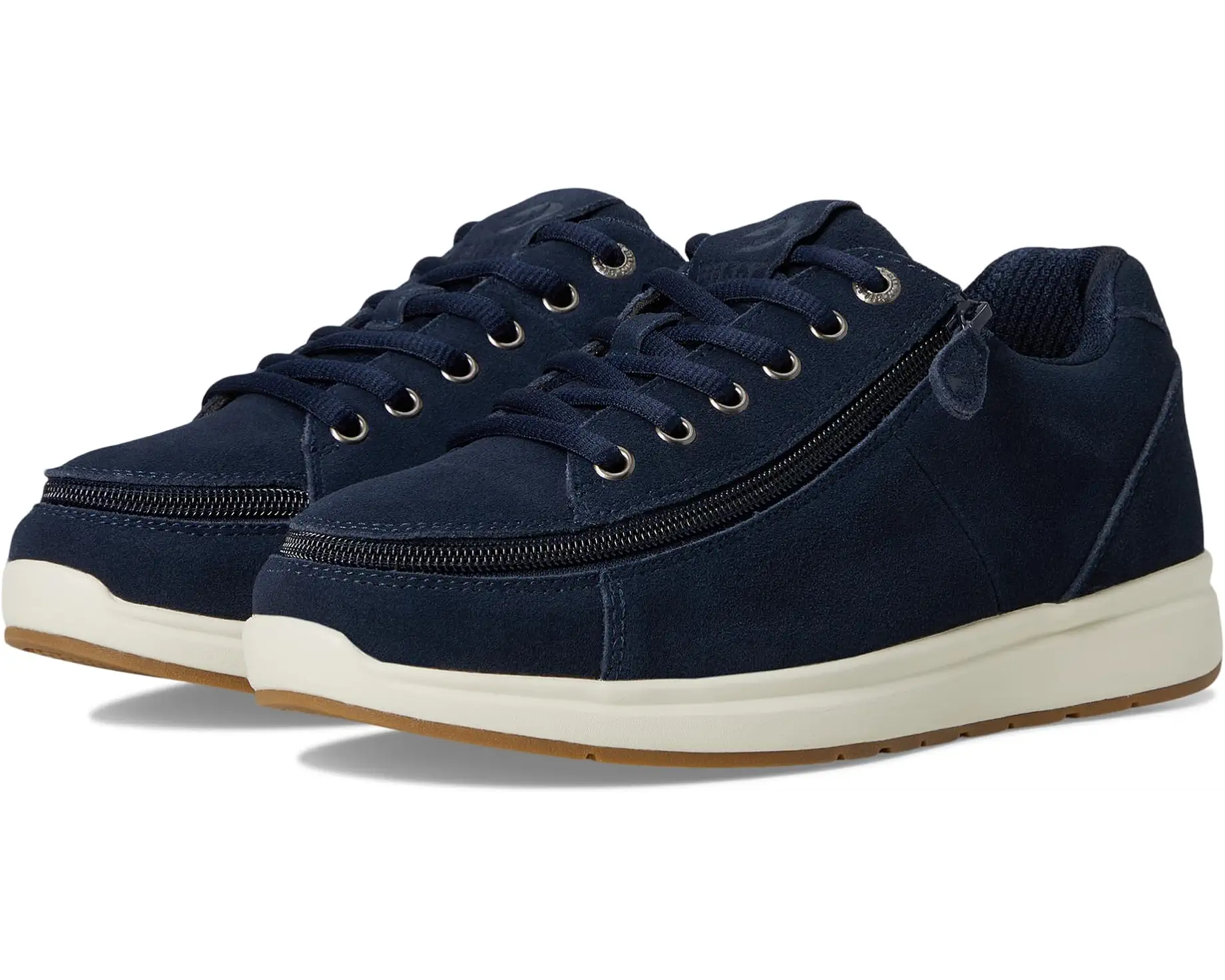
Zappos Adaptive is a dedicated section of Zappos’s site that curates footwear with features relevant to adaptive needs: zipper closures, elastic lacing, slip-on designs with firm structure, and wide-toe-box options. It aggregates shoes from multiple brands — including many that do not look adaptive at all — in one searchable collection. A useful first stop for anyone navigating footwear for a specific physical need.
Sneakers With Elastic or BOA Lacing
Standard laces require significant fine motor control to tie securely. Elastic laces (Xpand, Hickies) retrofit any lace shoe into a slip-on. The BOA Fit System — a dial-and-cable fastening used in ski boots and now in walking shoes and trail runners — provides a secure, precise fit with one hand motion. Several New Balance and Brooks models now include BOA systems.
The Most Important Variable: Fit
No amount of support engineering compensates for a shoe that does not fit correctly. Many older adults are wearing shoes that are a half to a full size too small, because feet widen and lengthen with age and most people have not been fitted recently. A shoe fitting with a Brannock device at a running specialty store takes five minutes and changes what you shop for.