The Best Canes That Actually Look Stylish (2026): A Designer’s Guide — and the House That Works With One
This post contains affiliate links. If you buy through them I may earn a small commission at no extra cost to you. How that works.
Part of our complete guide: Aging in Place: The Complete Guide. I’m a residential interior designer and a full-time caregiver for my parents, not a physical therapist — cane height and handle type should be fitted by a PT, and I’ll tell you where in this guide. Over 15+ years designing homes, I’ve learned that most safety problems are solved by better design long before medical equipment enters the room. Well Aging Home participates in affiliate programs; if you buy through a link, I may earn a small commission at no extra cost to you.
Stylish canes for seniors: quick answer
The cane that gets used is the safe one, so choose one the person is proud to carry: Top & Derby or Brazos for a beautiful object, Hugo Mobility for daily weight-bearing support, Switch Sticks for a folding travel cane. Have a PT set the height (handle at the wrist crease) and choose the handle — Derby for balance, offset or Fritz for real support — and put it in the hand opposite the weaker leg.
What I tell clients before buying a cane
Here’s what I’ve watched happen with canes, in clients’ homes and in my own family: a cane someone is embarrassed by stays by the door. The hospital-issue aluminum tube with the black rubber grip works perfectly and gets left at home, and the fall happens in the parking lot without it. So the aesthetics of a cane are not vanity. They’re the difference between a cane that gets used and one that doesn’t — which makes the beautiful cane the safe one.
The second thing I’d say is that the cane is only half of it. A cane needs a house that works with it: floors without edges to catch the tip, a rail on every stair, a lever on every door so one hand can open it while the other holds the cane, a light on the path. I’ve included those below, because that’s the part I can actually design — and it’s the part that keeps someone with a cane independent longer than any cane can.
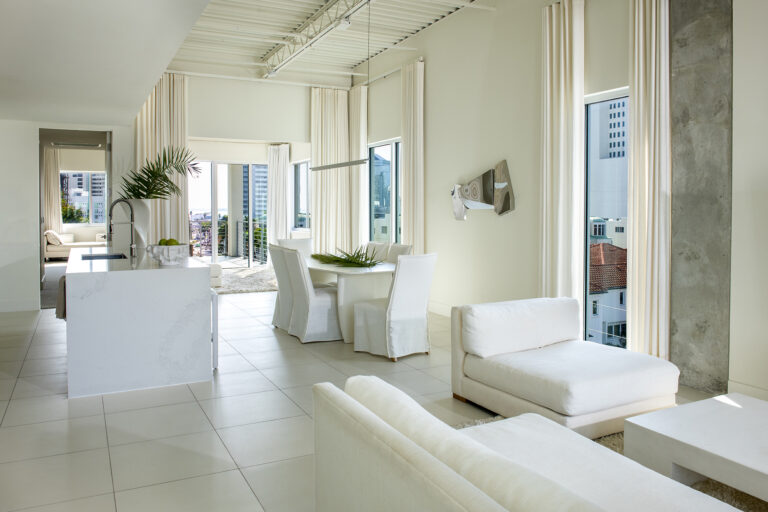
And the same rule as everywhere else on this site: none of it should read as adaptation. A cane that looks like a walking stick from a good outfitter, in a house with a beautiful stair runner and brass levers. Think Four Seasons, not hospital.
Think Four Seasons, not hospital
Walk through a Four Seasons with a cane and notice what the building does for you without announcing it:
- A handrail on every stair and ramp, on both sides, continuous through landings, at a height the hand finds without looking, often lit from beneath.
- Floors that are one level. Stone to carpet to wood with no lip — the cane tip never catches.
- Levers, not knobs, on every door, and doors that are either light or automatic.
- Somewhere to put the cane. A hook at the desk, a bench at the entry, a ledge in the lift. A cane leaned against a wall falls; a cane with a home doesn’t.
- Light on the path before you need it. Corridors and paths lit at floor level, dusk to dawn.
The products at the end of this page are those ideas for a house.
Fit first: the three things a PT will check
Before style: a badly fitted cane causes the falls it’s meant to prevent. Have a physical therapist fit it if you can. If you can’t, here’s what they’d do.
- Height. Standing in the shoes you wear most, arms relaxed at your sides, the top of the handle should sit at the crease of the wrist — so the elbow bends about 15–20 degrees when you hold it. Most adjustable canes cover 30–39 inches; wood canes are cut to length. Too tall and the shoulder hikes; too short and you lean into it.
- Handle. This is the most important design decision. A Derby handle (the classic curve) is the most elegant and needs grip and wrist strength — right for balance, wrong for real weight-bearing. An offset handle puts the weight straight down the shaft through the wrist and is more comfortable for daily support. A Fritz handle is the hybrid — slightly offset, easier on arthritic hands, and available in far better-looking designs than most offset canes. For balance: Derby is fine. For support: offset or Fritz.
- Tip. A single rubber tip for flat, dry floors; a quad tip (small four-point base) for anyone who needs more lateral stability or walks on uneven ground. A large quad base is a walker in disguise — if that’s what’s needed, a rollator is usually the more honest and safer answer. Replace tips when the tread wears; it’s the brake pad of the cane.
Two more from experience: weight matters — a cane carried all day should be light, and a wood cane is heavier than it looks; and the cane goes in the hand opposite the weaker leg, which is the thing most people get backwards.
The canes I’d point you to
These are the brands I’d send a client to, by what they’re for. The Brazos is the one in my collection.

Brazos Twisted Walnut Derby Cane
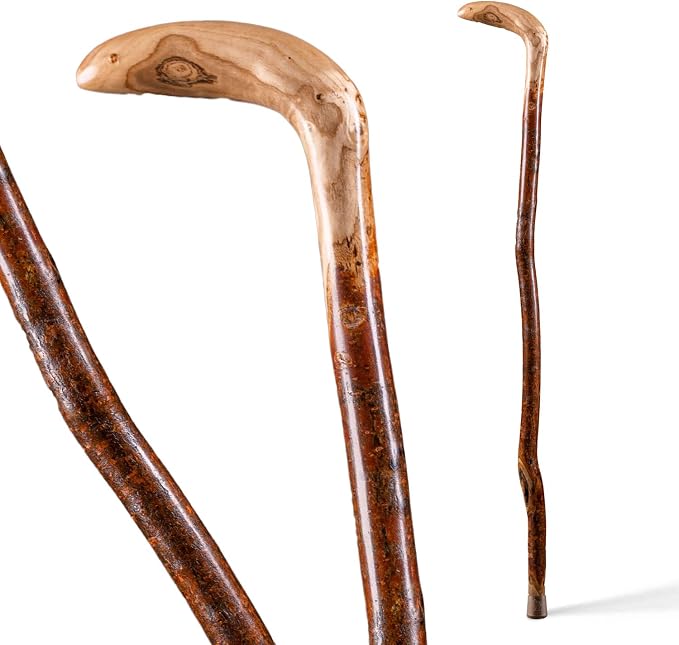
Handcrafted solid walnut with a smooth Derby handle, made one at a time in Texas. It looks like a walking stick from a good outfitter, not equipment — which is why it gets carried. Cut to length (34″ or 37″); have a PT confirm the height. Balance and light support, not heavy weight-bearing.
The beautiful cane is the safe one
Top & Derby — for the person who wanted a beautiful object
A design-studio cane: a solid hardwood or coloured shaft with a clean, sculpted Derby handle and a bright, non-slip tip. It reads as a walking stick from a good outfitter, not equipment. Balance and light support, not heavy weight-bearing.
Brazos Walking Sticks — for a well-furnished home
Hardwood canes and walking sticks in cherry, walnut and oak, made in Texas. In a house with wood floors and good furniture, a wood cane belongs; it looks like what it is, a quality walking implement. Heavier than aluminum; choose the lighter woods for all-day use.
Hugo Mobility — for daily support that still looks intentional
Offset and ergonomic handles that distribute weight properly, in brushed aluminum and patterned finishes. Their cable-handle design has a loop at the top that hangs from a table edge or wrist — which solves the “cane falls over” problem better than most.
Switch Sticks — for the folding cane in the bag
Folding canes in solid colours, prints and neutrals, positioned explicitly as accessories. Fold to fit a handbag or carry-on. For balance assistance and travel, not heavy weight-bearing.
Fashionable Canes / Royal Canes — for a specific look
A huge range of Derby and Fritz handles in wood, brass and resin, at every price. If someone has a picture of the cane they’d feel good about, this is usually where it exists.
| Brand | Handle | Best for | Weight-bearing | Price |
|---|---|---|---|---|
| Top & Derby | Derby | Design-first, balance | Light | $$$ |
| Brazos | Derby, Fritz, knob | Wood-furnished homes | Moderate | $$ |
| Hugo Mobility | Offset, ergonomic | Daily support | Full | $ |
| Switch Sticks | Derby (folding) | Travel, balance | Light | $$ |
| Fashionable Canes | Everything | Finding a specific look | Varies | $–$$$ |
The house that works with a cane
A cane tip catches on a quarter-inch rug edge, a threshold, a loose stair carpet. A cane hand can’t turn a knob. A cane is no help at all in the moment of standing from a low seat or getting out of a car. Everything below, from my full collection, is about those moments.
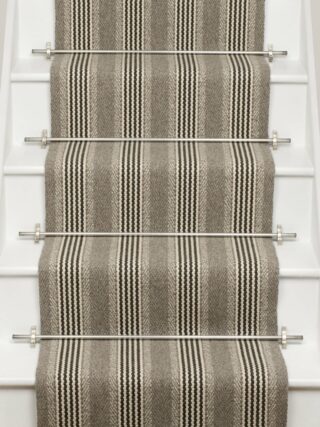
Roger Oates Sudbury Light Grey Stair Runner
Shetland collection flatweave in natural un-dyed wool. Low pile, firm underfoot, exceptional grip on stairs. The specification for staircases where safety and beautiful design both matter.
Stairs a cane tip can trust

Wagner LumenRail Illuminated Railing (Bantam)
LED-integrated handrail for decks and outdoor stairs. Also available in glass configurations for modern architecture.
A lit handrail — the second cane on every stair
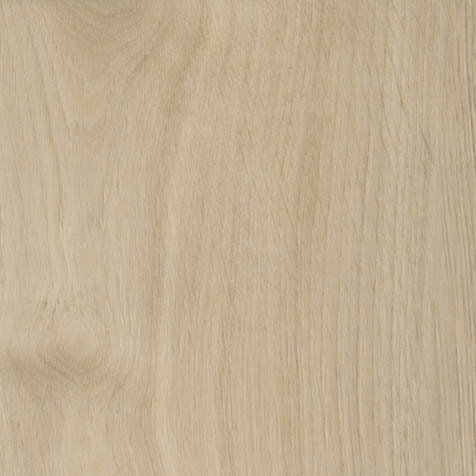
Shaw Contract Coretec Branching Out Plains Oak — Living Areas
100% waterproof LVP, floating install, textured traction. Eliminates transition strips between rooms.
Firm, level, no edges to catch a tip

Mohawk Home Dual Surface Felt + Rubber Rug Pad
Rachel’s rule: no rug without this pad. Best grip + cushion for hard floors.
If there is a rug, it does not move
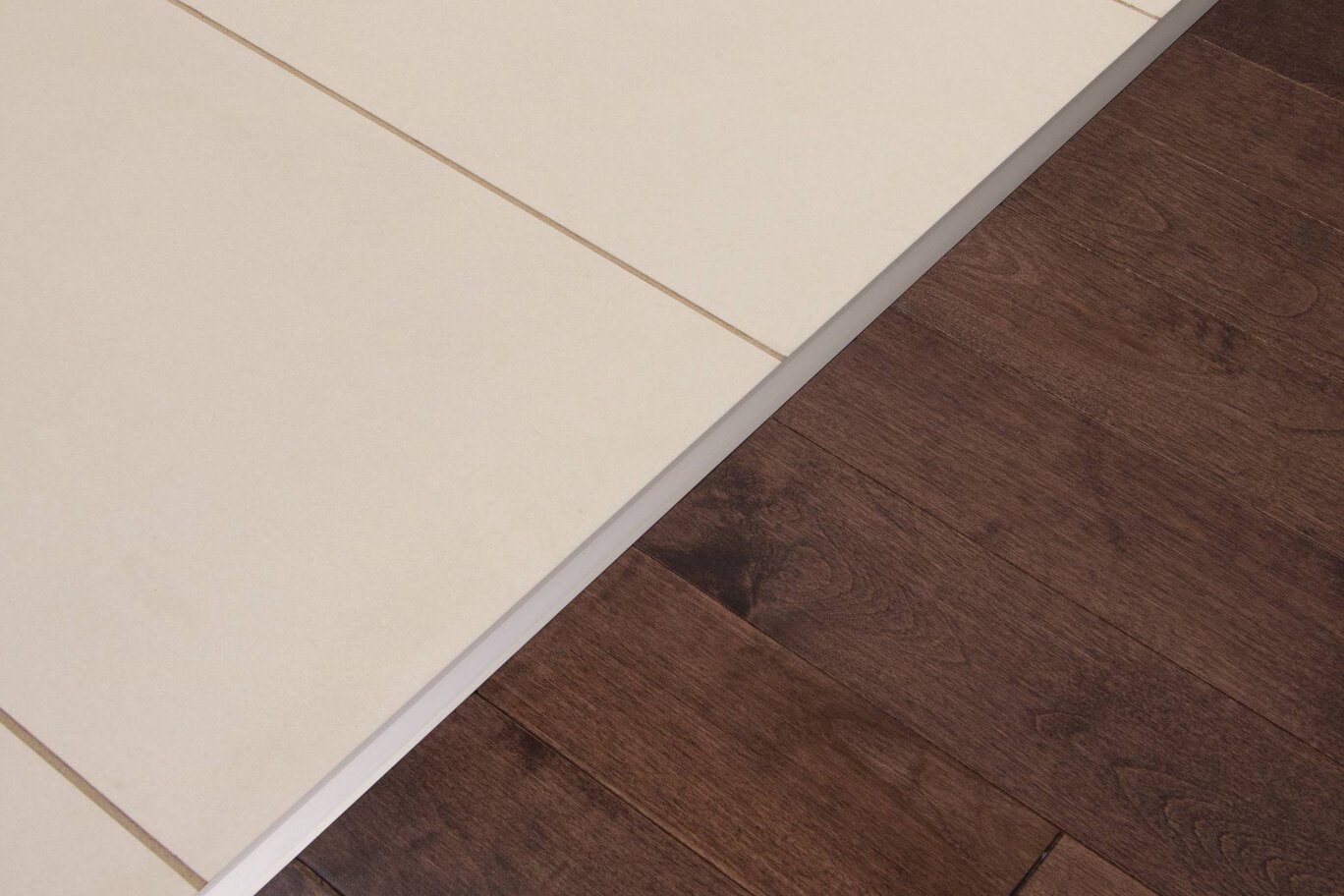
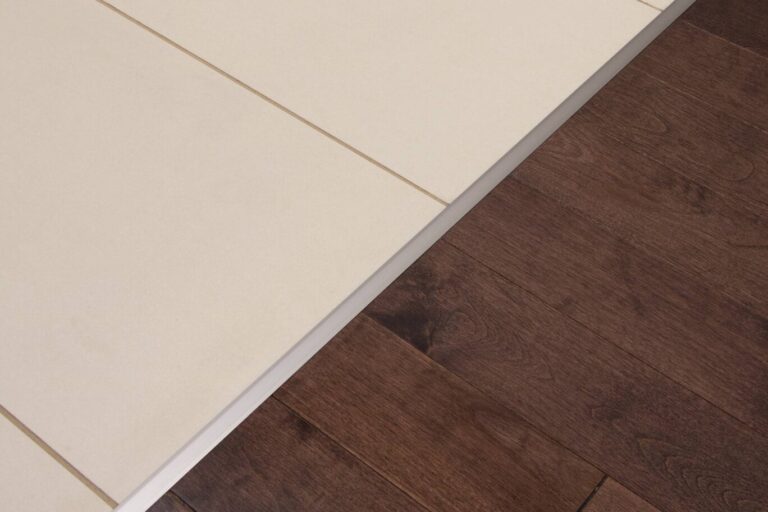
Schluter RENO-T — Floor & Decor
17/32 in. wide transition, aluminum satin finish. Floor & Decor carries a wide selection of Schluter profiles and is an excellent resource for contractors specifying whole-floor transitions.
Erase the threshold a tip catches on

Wyze Palm Lock
Palm recognition. No keys, no codes. Works in complete darkness. Transformative for limited dexterity.
One hand on the cane, the other opens the door
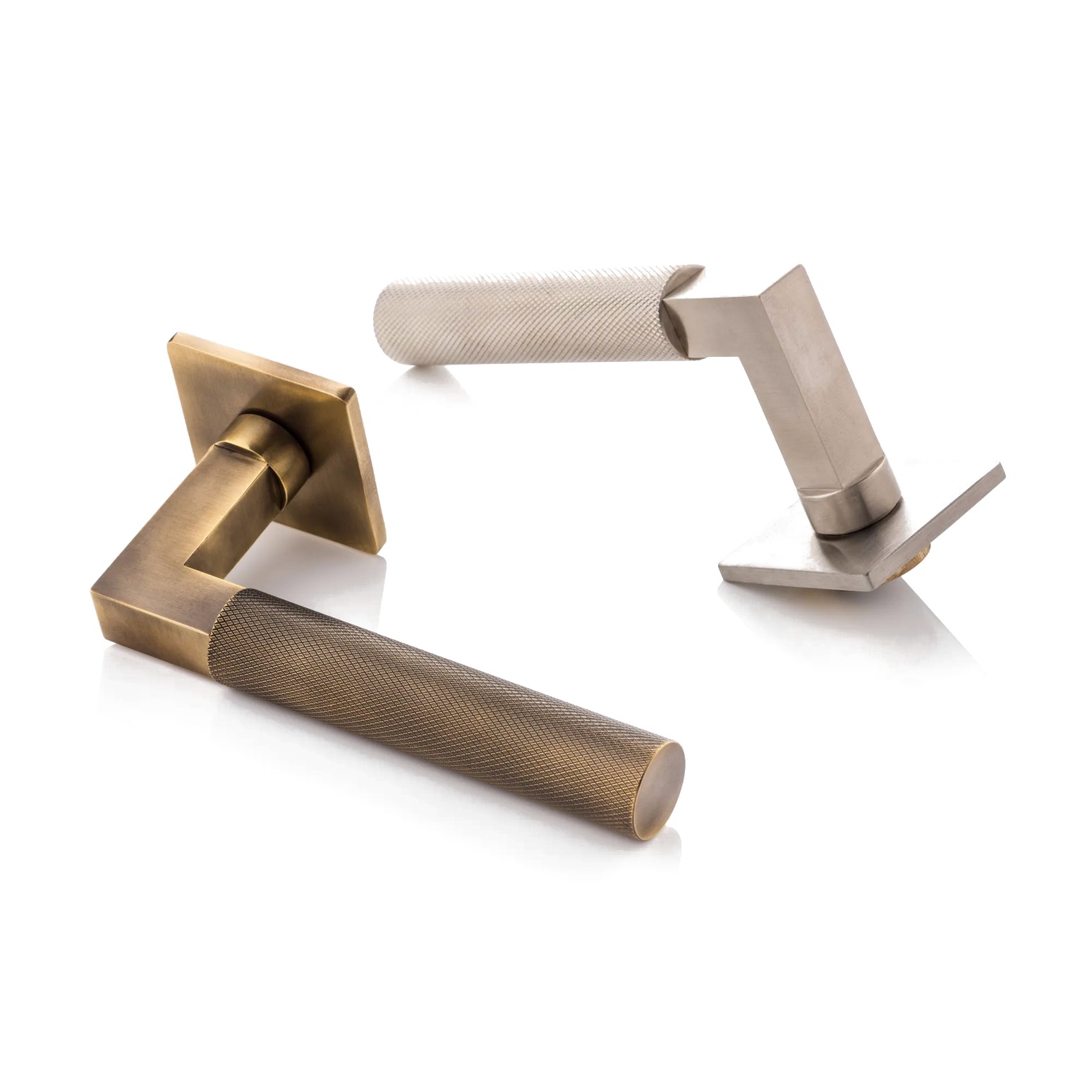
Joseph Giles Ashworth II Knurled Lever
Knurled grip for wet or arthritic hands. Solid brass, multiple hand-applied finishes.
A lever, not a knob — one hand, no grip strength
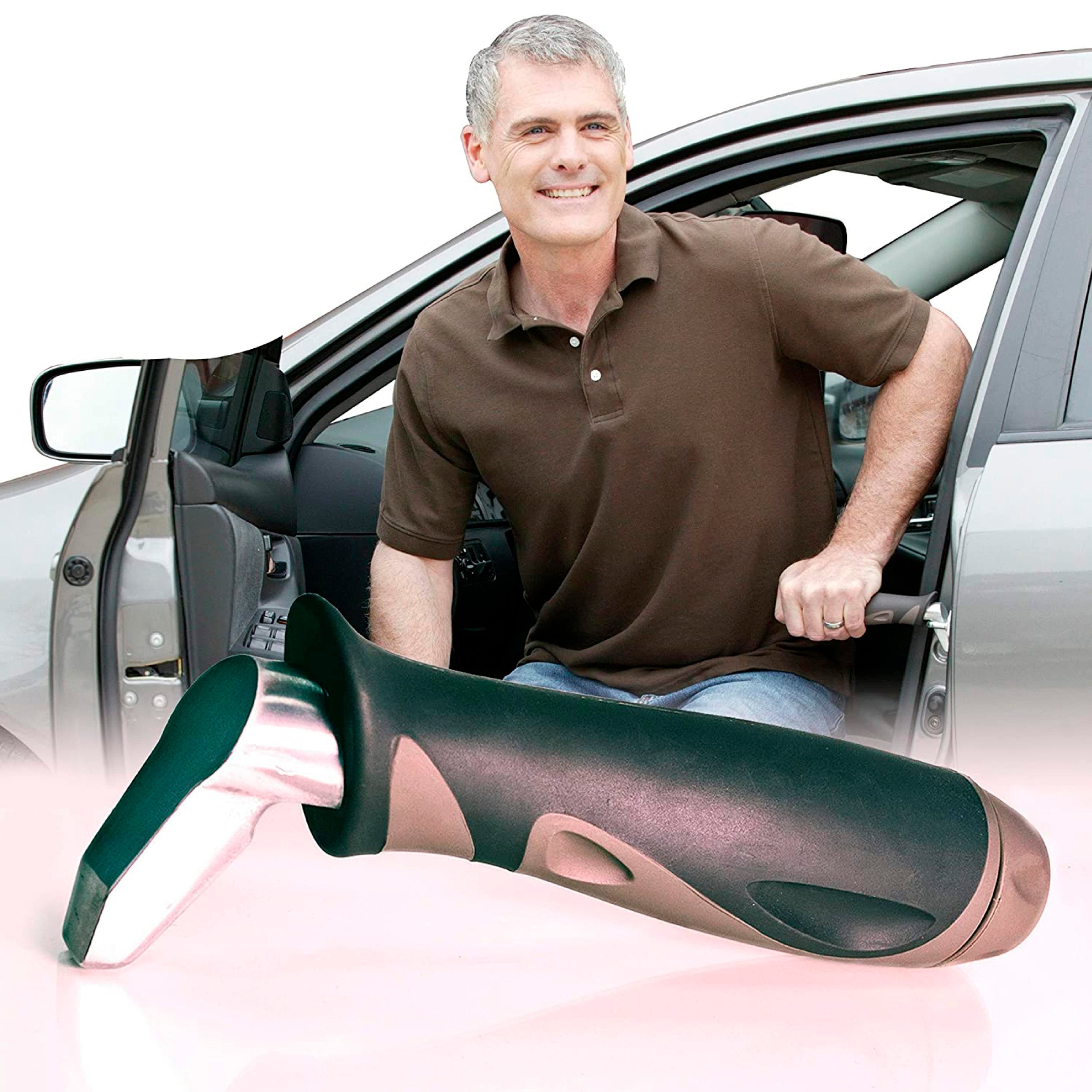
Stander Metro Car Handle Plus
Ergonomic grip + built-in flashlight for car transfers. No vehicle modifications required.
The cane is useless getting out of a car; this is not
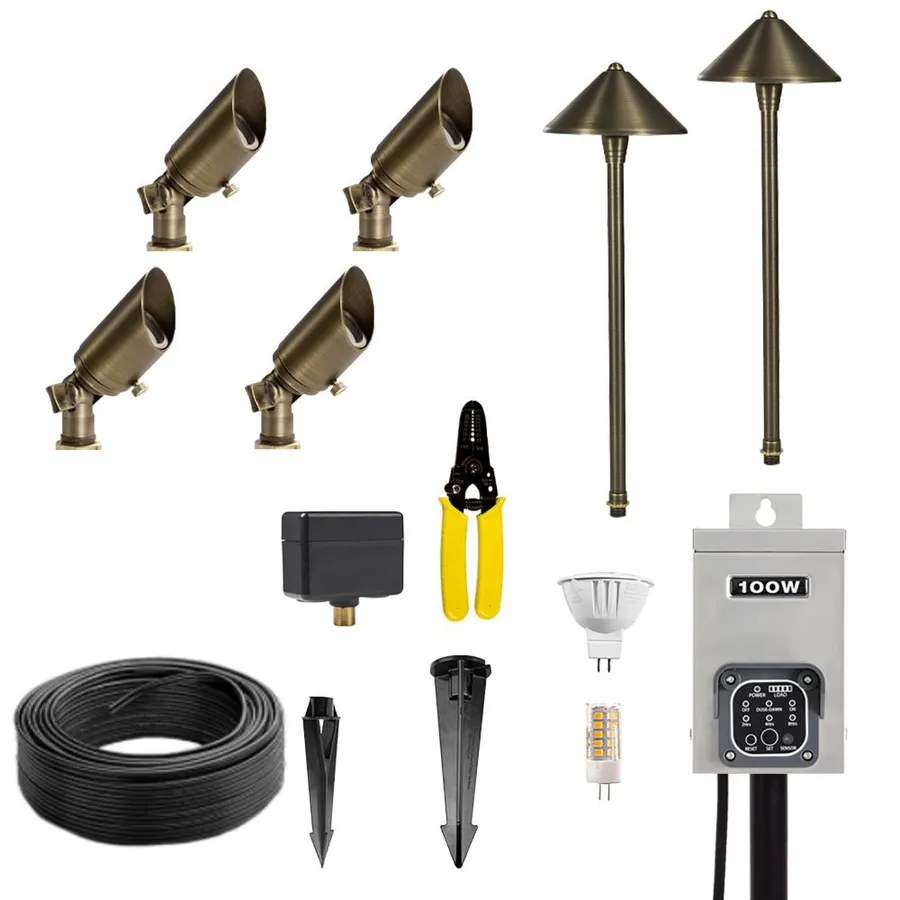
Volt Lighting
Professional-grade landscape lighting configurable for motion activation. Residential-focused, high quality.
Light the path the cane will walk at dusk
Three more design moves that cost almost nothing: a hook or a narrow umbrella stand at the entry so the cane has a home and stops falling on the floor; a chair with arms in every room the person uses, because standing is where the cane is weakest — see lift chairs that look like recliners; and a second handrail on the stairs, because a cane and a rail on one side is not the same as a rail on both. The lit handrail and runner above are how I make that second rail look like it was always there.
For fall-risk assessment and cane fitting, the CDC’s STEADI program is the clinical resource. Related: universal design ideas that add home value, lift chairs that look like recliners, motion-sensor lighting.
Who this is not for
- Anyone who needs to put real weight through the cane on both sides, or who’s had a fall with a cane — that’s a walker or rollator conversation with a PT, and the good ones look better than you’d think.
- Anyone whose grip has weakened significantly — a forearm crutch or a rollator with hand brakes is safer than a cane they can’t hold.
- Anyone buying a cane for someone who hasn’t asked for one — the embarrassment problem gets worse, not better, when it’s imposed. Let them choose the beautiful one.
Frequently asked questions
How do I know the right cane height? Arms relaxed at your sides in your usual shoes, the handle at the crease of the wrist, elbow bent about 15–20 degrees.
Which hand holds the cane? The hand opposite the weaker or painful leg.
Derby or offset handle? Derby for balance and looks; offset or Fritz for daily weight-bearing and arthritic hands.
Are wooden canes strong enough? Good hardwood canes are rated well above body weight. They’re heavier than aluminum and can’t be adjusted, so they need to be cut to the right length.
Does Medicare cover a cane? Part B covers a standard cane as durable medical equipment with a doctor’s order. It won’t cover the beautiful one — but the difference is often under $100.
Why you can trust this guide
I’m an interior designer with 15+ years of residential work, and a full-time caregiver for my own parents. I’ve spent years evaluating products that improve safety without making a home feel institutional, and I’ve lived with most of what’s on this page. This guide puts design-forward solutions first and equipment second, and I’ll tell you when a product isn’t the answer. Where a decision depends on a specific body or diagnosis, I say so and point you to an OT or PT.
The design comes first
The safest home for a cane user rarely looks adapted. In my experience, independence comes from design first: one level floor, a rail on both sides of the stairs, a lever on every door, a light on the path. The cane is the smallest part of it — and it should be the one the person is proud to carry.
Free resource: 12 Changes That Make a Home Safer Without Looking Clinical.