Easy-Grip Kitchen Tools for Arthritis and Weak Hands
Disclosure: Well Aging Home participates in affiliate programs. If you buy through our links, we may earn a small commission at no extra cost to you.
Arthritis, a weaker grip and tired hands are some of the most common reasons people stop cooking. As an interior designer for 15+ years, I design kitchens to be used for decades, and the right tools matter as much as the cabinets. The good news: the easiest-to-use tools are often the best-made ones, and many are beautiful enough to leave out.
What I tell clients before buying kitchen tools
Look for three things: a thick, soft handle you can hold without squeezing, a motion that uses your arm and body weight instead of your fingers, and a weight light enough to lift with one hand. Anything that needs a hard twist or a tight pinch is the tool to replace first.
| The hard task | The easier tool |
|---|---|
| Opening jars | An automatic jar opener |
| Peeling | A thick-handled swivel or Y-peeler |
| Chopping | A rocking knife that uses downward pressure |
| Lifting pots | Lighter pans and pots with two handles |
| Turning on the water | A touch faucet you can tap with a wrist |
My picks

Automatic Electric Jar Opener
One button. It grips the lid and turns it for you, so no wrist twisting at all.

OXO Good Grips Swivel Peeler
The thick, soft handle is the reason this brand exists. Far less squeezing than a thin metal peeler.

Ulu Rocking Knife with Walnut Stand
Cuts with a rocking motion and downward pressure instead of grip and sawing. Beautiful left out on the counter.
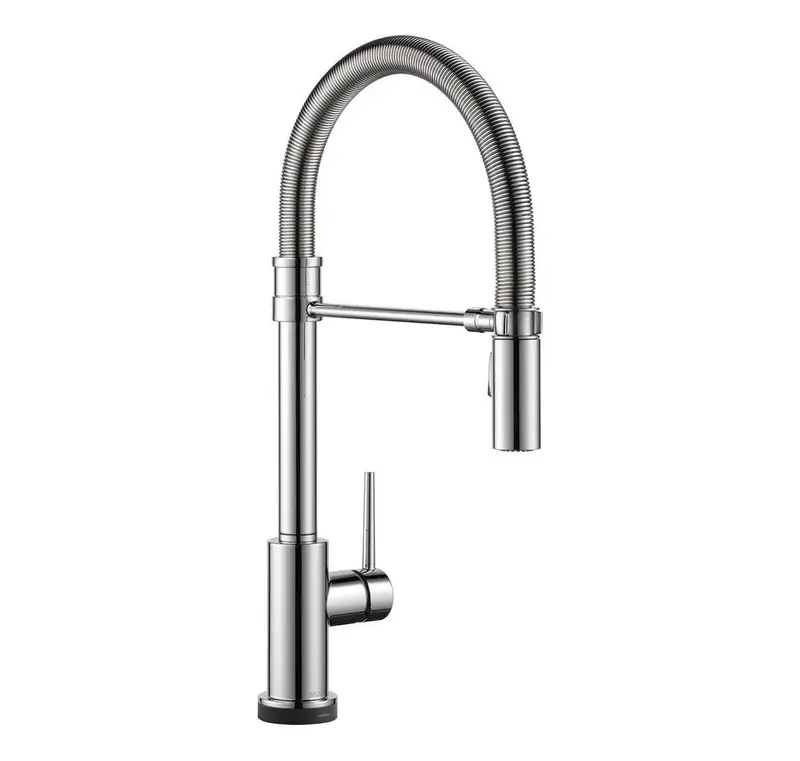
Delta Trinsic Touch2O Pull-Down Faucet
Touch anywhere to activate. Magnetic docking. Available in multiple finishes.
Open jars without twisting
Jar lids are the number one complaint I hear. An automatic jar opener sits on the lid, grips it and turns it with one button. Rubber grip pads are the low-tech backup: they add traction so less hand strength does more.
Peel and chop with less grip
A peeler with a thick, cushioned handle takes far less squeezing and wrist rotation than a thin metal one. For chopping, a rocking knife like an ulu cuts with downward pressure from your arm instead of a tight grip and a sawing motion. Pair it with a cutting board that has a non-slip base, or set a damp towel underneath, so the board never slides.
Cook with lighter, two-handled pots
Cast iron and heavy enameled pots are beautiful and hard to lift full. For everyday cooking, I steer clients to lighter pans and pots with a helper handle on the opposite side, so the weight is shared between two hands. Measuring cups and spoons with long, angled handles let you read and pour without lifting them to eye level.
Design the kitchen around your hands
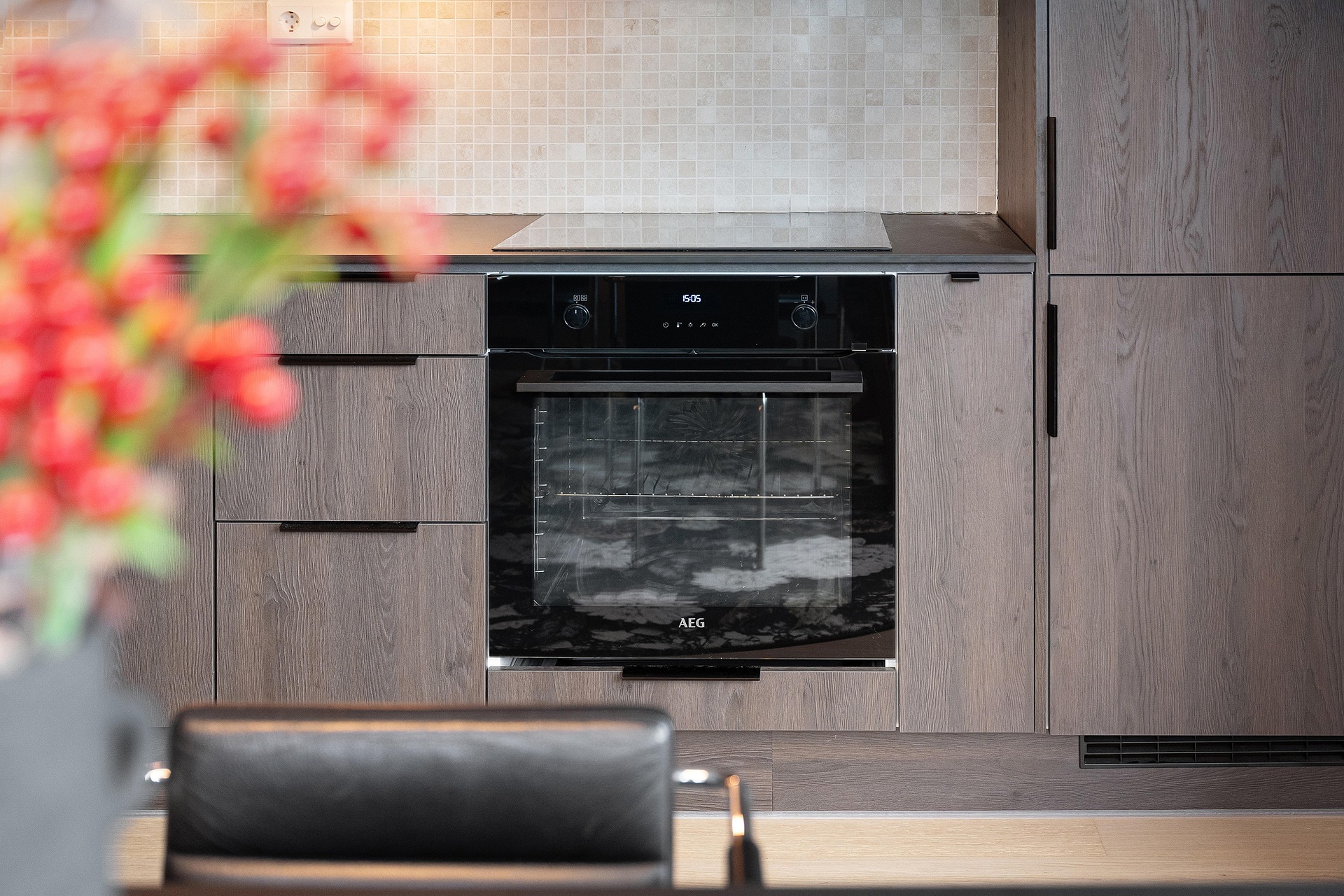
The tools matter, and so does the room. Touch or single-lever faucets, D-shaped cabinet pulls instead of small knobs, drawers instead of deep lower cabinets, and a pull-out cutting board at counter height all reduce the grip and reach that cooking asks for.
The design comes first
The best kitchen for weak hands doesn’t look like adaptive equipment. It looks like a well-designed kitchen with good tools left out on the counter: a walnut-handled ulu, a sleek touch faucet, matching brass pulls. Think Four Seasons, not hospital.
Kitchen questions I hear most
What kitchen tools help with arthritis?
Tools with thick, soft handles, ones that use arm pressure instead of finger grip, and anything that removes twisting: an automatic jar opener, a thick-handled peeler, a rocking knife, lighter two-handled pots and a touch faucet.
How do you open a jar with weak hands?
Use an automatic electric jar opener, which grips and turns the lid with one button. Rubber grip pads also add traction so less strength is needed.
What is a rocker knife?
A curved blade, like an ulu, that cuts by rocking it with downward pressure instead of gripping tightly and sawing. It is easier on the hands and can be used with one hand.
What kitchen design changes help a weak grip?
Touch or single-lever faucets, D-shaped cabinet pulls instead of knobs, drawers instead of deep lower cabinets, and a pull-out cutting board at counter height.