How to Design a Kitchen You Can Use at 80
This post contains affiliate links. If you buy through them I may earn a small commission at no extra cost to you. How that works.
Disclosure: Well Aging Home participates in affiliate programs. If you buy through our links, we may earn a small commission at no extra cost to you.
The kitchen is where most people spend more time than they expect, and where the cumulative strain of daily life is most keenly felt. Opening jars, reaching into upper cabinets, bending into lower ones, standing at a counter that is six inches too low or two inches too high: kitchen design has a direct and measurable effect on physical comfort over time. Designing a kitchen you can actually use at 80 does not mean designing a lesser kitchen. It means designing a better one.
Counter Height: One Size Does Not Fit All
The standard 36-inch kitchen counter was designed for an average height that may not match yours, and that will certainly feel different when you are standing versus sitting. Variable-height counters, with one section at 34 inches for seated use and the standard 36 for standing work, serve more people more comfortably than a single height. This is particularly relevant for anyone who anticipates spending time in a wheelchair or on a stool.
Pull-Out Everything
The interior of a base cabinet is largely unusable if it requires bending deeply and reaching blindly into the back. Full-extension pull-out shelves, drawer-style lower cabinets, and pull-out corner units change the geometry entirely. Everything comes to you. Custom cabinet shops and semi-custom lines like Rev-A-Shelf offer pull-out inserts that can retrofit into existing cabinets as well as be specified new. This is the single highest-return cabinet upgrade for long-term kitchen use.
Drawers, Not Doors
Pot drawers — deep, full-extension drawers for cookware — are among the most popular upgrades in kitchen renovations, for good reason. Pulling a drawer open and lifting a pot straight out is dramatically easier than opening a door, crouching, and pulling a pot forward from the back of a cabinet. Specify drawers wherever possible in the lower run of cabinetry.
D-Ring and Bar Pulls
Small round cabinet knobs require grip and rotation. D-ring pulls and bar handles require only a finger hook or a palm push. This matters more than it seems: a kitchen full of lever-style hardware is easier to use when hands are wet, gloved, or arthritic. It also tends to look more contemporary.
Appliance Placement
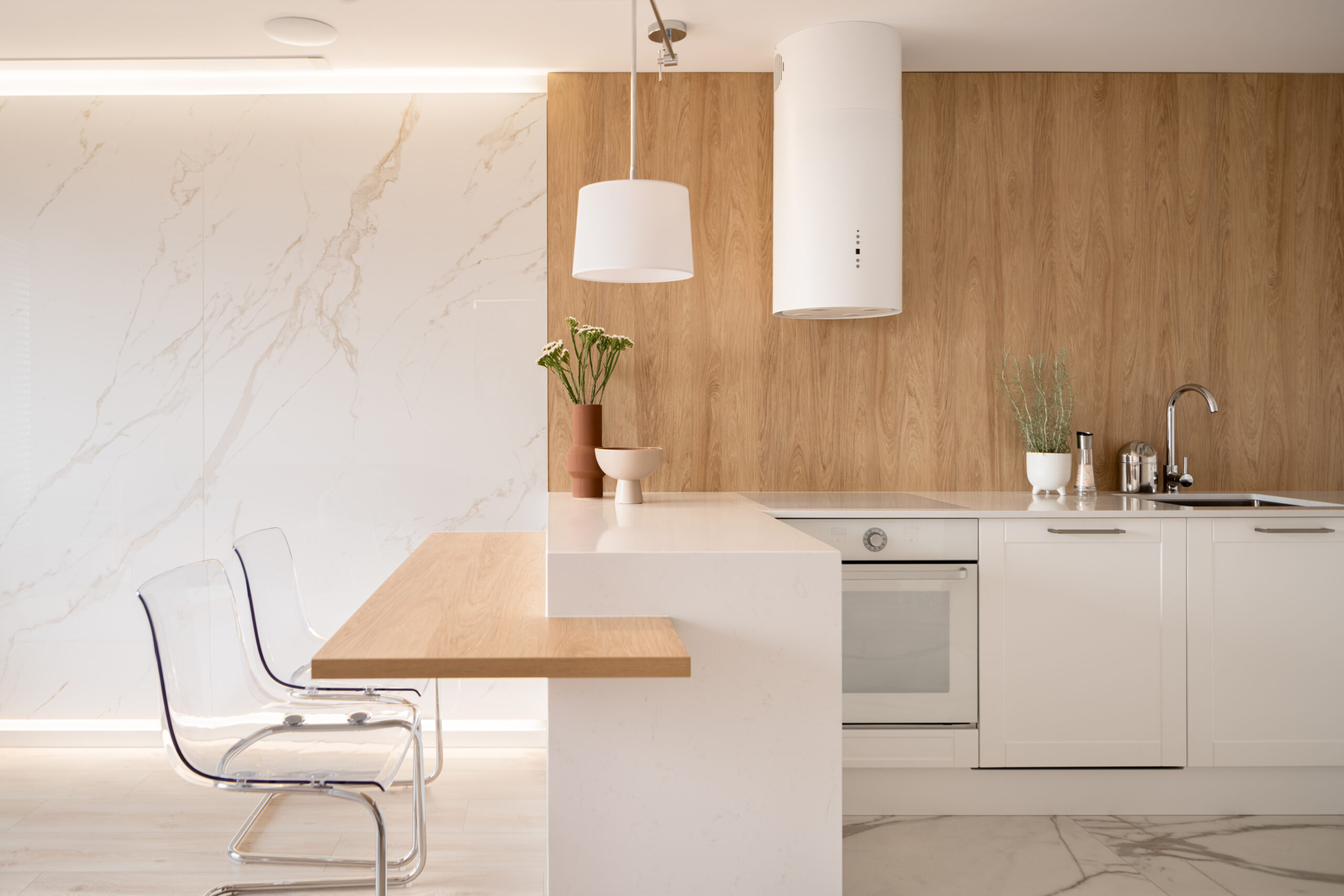
Wall ovens placed at counter height eliminate bending to pull heavy dishes from a floor-level oven. A microwave drawer below the counter is safer than an over-the-range unit above eye level. A refrigerator with the freezer below and the refrigerator section at top makes daily access easier. These decisions are permanent; getting them right at the design stage prevents decades of inconvenient workarounds.
Touchless and Lever Faucets
A single-handle or touchless kitchen faucet is easier to operate than a two-handle design and reduces the risk of scalding. A pull-down sprayer head extends the reach of the sink without requiring the user to reposition themselves. These are standard specifications in well-designed kitchens and cost the same as their less functional equivalents.
Flooring That Does Not Punish
Concrete, natural stone, and ceramic tile are unforgiving underfoot after extended periods of standing. Cork, vinyl plank, and rubberized surfaces absorb impact and reduce fatigue. Anti-fatigue mats provide similar relief at specific work zones. In a kitchen where you will stand for hours over a lifetime, this is not a trivial consideration.
Adequate Lighting
Under-cabinet LED strips at the work surface, recessed overhead lighting that eliminates shadows, and a well-lit interior pantry or cabinet are functional requirements that also happen to define a quality kitchen. Seeing what you are doing clearly reduces errors, speeds preparation, and makes the kitchen more enjoyable to work in at every age.