Best Flooring for Aging in Place
Flooring is one of the highest-stakes decisions in any home, and one that is rarely revisited once made. Choosing the right floor for aging in place means selecting a surface that minimizes fall risk, holds up to daily use, and still looks exactly the way you want your home to look. All of these requirements are compatible.
What Makes a Floor Safe
Slip resistance is the primary safety variable in flooring, and it is measured by a coefficient called DCOF (Dynamic Coefficient of Friction). For floors in wet or high-traffic areas, a DCOF of 0.42 or higher is the recommended minimum. The texture, finish, and material of the floor determine this rating; not all tiles, not all hardwood finishes, and not all vinyl products are equal.
Beyond slip resistance, flooring should have consistent surface height across transitions, minimal grout lines or gaps that can catch a foot or wheelchair wheel, and enough cushion or give to reduce impact on falls that do occur.
Luxury Vinyl Plank (LVP)
LVP is the strongest overall recommendation for most homes seeking both safety and aesthetics. It is slip-resistant, water-resistant, warm underfoot, and available in designs that credibly replicate hardwood, stone, and tile. Shaw Floors, LifeProof (Home Depot), and Coretec all produce LVP at various price points that meet or exceed the DCOF threshold. It can be installed over most existing floors without significant subfloor preparation, and it handles moisture without swelling or warping.
Hardwood: Beautiful With Caveats
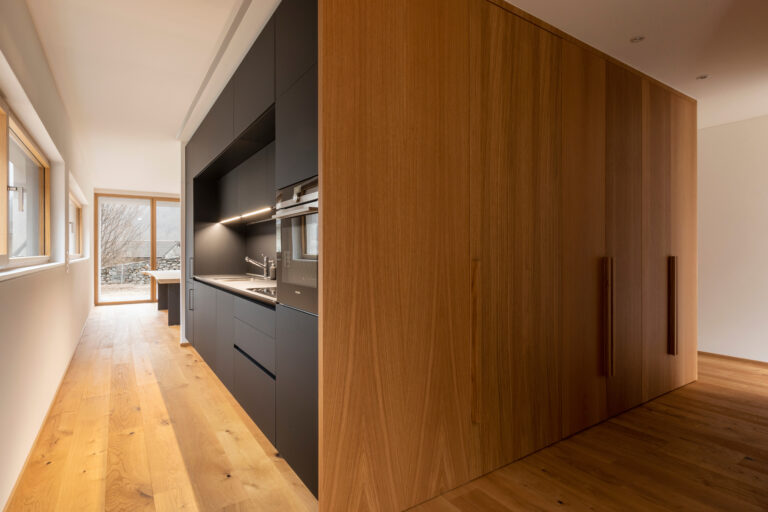
Natural hardwood is a design premium that many homeowners are unwilling to sacrifice, and that is reasonable. The safety considerations: choose a satin or matte finish over high gloss (which amplifies reflective slipping risk when wet), select wider planks (fewer grout-line-style transitions), and apply a non-slip topcoat or wax specifically formulated for hardwood. Hardwood over a crawlspace or basement can also provide natural give that reduces impact on falls.
Tile: Right When Specified Correctly
Ceramic and porcelain tile installed with a matte, textured finish rated for wet areas is a safe flooring choice. The critical variables are the tile finish (matte, not polished) and the grout line width (narrower is better for mobility). Large-format tile with minimal grout lines is the best-performing tile specification for safety and aesthetics simultaneously.
Transitions and Thresholds
Floor transitions between rooms — the metal strips at doorways between tile and hardwood, the height differences between different floor types — are among the most common trip hazards in a home. Flush or ramped transitions, installed with a maximum height of 0.5 inches, are the right specification. Raised thresholds above this height should be replaced during any flooring project.
Get the Beautiful Safety Starter Kit
12 changes that keep parents safe — without the clinical look