Complete Guide to Aging in Place: What to Do, In What Order
This post contains affiliate links. If you buy through them I may earn a small commission at no extra cost to you. How that works.
Disclosure: Well Aging Home participates in affiliate programs. If you buy through our links, we may earn a small commission at no extra cost to you.
Aging in place — the ability to live in your own home safely and independently as you grow older — doesn’t happen by accident. The homes most people live in were designed for peak-mobility adults, not for the full arc of human life. This guide gives you the full picture: what aging in place actually involves, what changes make the biggest difference, and the right order to tackle them.
What Aging in Place Actually Means
It isn’t just about avoiding a nursing home. It’s about maintaining dignity, independence, and quality of life in a space that feels like home — not like a facility. Done right, it’s invisible. Your home functions beautifully and never looks like it was adapted for safety reasons. The goal: a home that works for you at 60, 70, 80, and beyond.
The Four Categories of Modifications
1. Fall Prevention
Falls are the leading cause of injury and injury-related death in older adults. Most prevention improvements are low-cost, high-impact, and invisible: securing rugs, installing grab bars, improving lighting, clearing pathways, addressing flooring transitions. Start here — the changes are inexpensive and the return is enormous.
2. Mobility Accessibility
Wide doorways (minimum 32 inches clear, ideally 36 inches), lever-style door handles instead of round knobs, zero-threshold entries and showers, and clear turning radius in key rooms. These modifications are more involved but make the home genuinely functional for a wide range of mobility levels.
3. Daily Living Support
Appliances at accessible heights, pull-out cabinet shelving, touchless faucets, smart home technology, comfortable-height beds and toilets, organized storage. Many of these are improvements you’d want regardless of age.
4. Emergency Preparedness
A medical alert system, a phone within reach at all times, clear pathways for emergency responders, family communication plans. Often last on the list — it shouldn’t be.
The Right Order: What to Do First
Phase 1: No-Renovation Fixes (Do These Now)
- Secure or remove all loose rugs
- Install motion-activated night lights in all hallways and bathrooms
- Clear furniture from primary pathways
- Move daily-use items to accessible heights
- Replace round door knobs with lever handles
- Improve stair handrails — secure, continuous, full-length
- Install non-slip strips on smooth stair treads
Phase 2: Low-Cost Additions (Under $500)
- Professionally install grab bars in shower, tub, and beside toilet
- Add a shower seat or bench
- Install a raised toilet seat or comfort-height seat
- Adjust bed height if needed
- Set up a medical alert system
Phase 3: Targeted Renovations
- Replace tub-shower combo with a curbless walk-in shower
- Replace standard toilet with comfort-height (ADA) toilet
- Replace high-risk flooring with slip-resistant materials
- Widen doorways if wheelchair or walker access is needed
- Install pull-out shelving in kitchen cabinets
Phase 4: Major Structural Changes (Long-Term Planning)
- First-floor bedroom and full bath
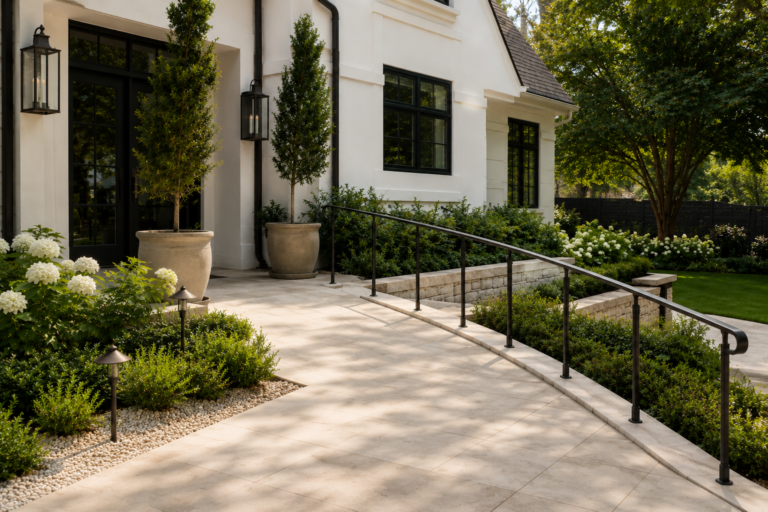
- No-step entry — ramp or grade-level entrance
- Stair lift or elevator if multiple stories are essential
- Accessible kitchen layout with roll-under counters
- Smart home infrastructure for remote monitoring and automation
Prioritizing by Risk
Always high priority: Bathroom, stairs, the path traveled most at night.
Prioritize if relevant now: Mobility-limiting conditions, vision impairment, balance issues, recent falls.
Plan ahead but don’t rush: Major structural changes — worth planning financially before they’re urgently needed.
Work With a Professional
Certified Aging in Place Specialists (CAPS) have specific training in the practical and design aspects of these modifications. An interior designer with aging-in-place experience ensures changes are beautiful as well as functional. The goal should always be a home that supports your life — not one that announces its accommodations.
Plan Proactively
The most important thing: plan before it’s urgent. Modifications made proactively are cheaper, more thoughtful, and more integrated. A fall or hospitalization forces quick decisions under pressure. Planning gives you the time to do it right. The best aging-in-place home is one you’d want to live in at any age. That’s the standard worth building toward.
Save this for later
Pin it to your Pinterest board so it’s there when you need it.