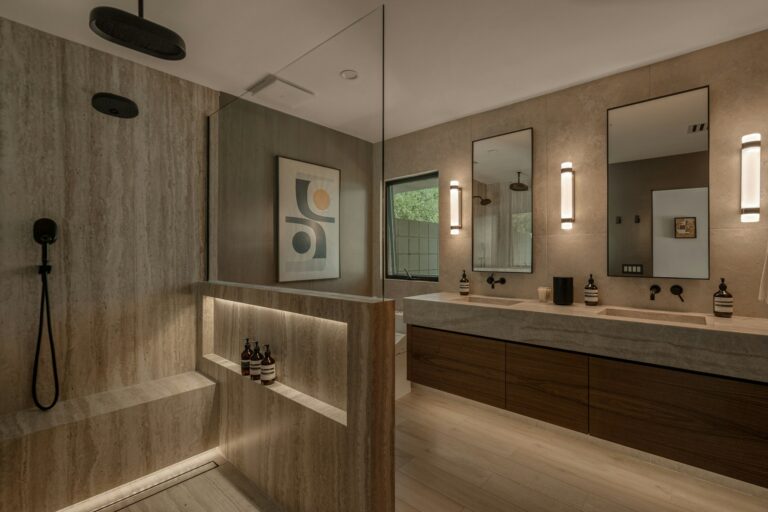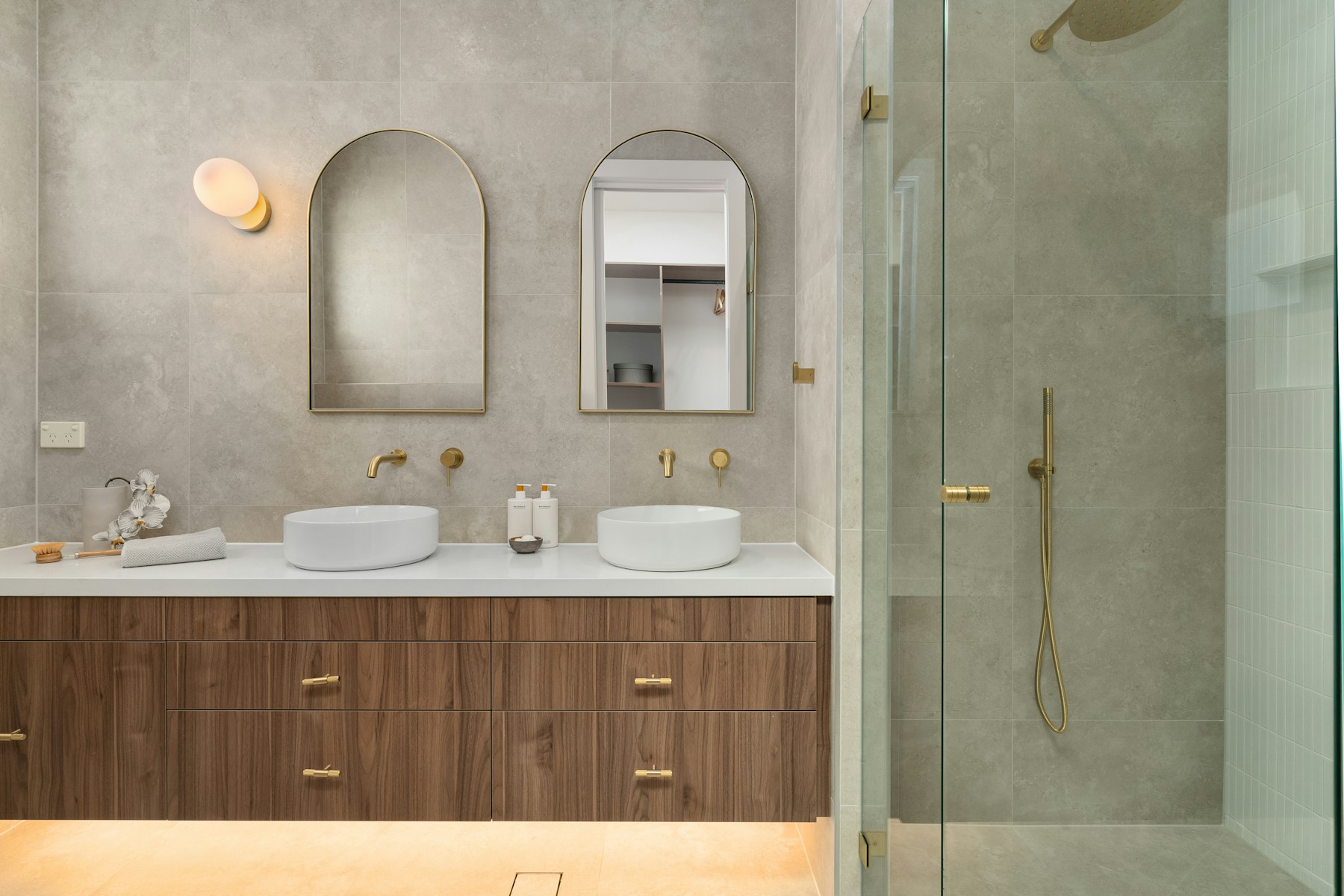
Medicine Cabinet Ideas for Aging in Place: Lighted, Recessed, Reachable
In 15+ years of designing bathrooms, the piece I specify more than any other in an aging-in-place remodel isn’t a grab bar. It’s the medicine cabinet. The moment a vanity is wall-hung so someone can sit at the sink, the storage under the faucet disappears. A recessed, lighted medicine cabinet is how that storage comes back, at eye level, where you can actually reach it.
Real estate agents will tell you that homes which visibly announce accessibility are harder to sell. The best accessible bathrooms don’t look adapted at all. Think Four Seasons, not hospital. A beautiful mirrored cabinet is one of the quiet details that makes that possible.
What a good medicine cabinet solves
| The need | The design answer |
|---|---|
| A wall-hung or open vanity leaves no storage under the sink | A recessed medicine cabinet, sized to the full width of the vanity |
| Bending to low cabinets is hard on backs and knees | Daily items on shelves between 40 and 48 inches off the floor |
| Small print on labels and dim corners | Interior LED lighting that switches on when the door opens |
| Cords and chargers crowding the counter | Outlets and USB ports inside the cabinet |
| Nighttime trips to the bathroom | A built-in night light, so overhead lights stay off |
| A fogged mirror after a shower | An auto-defogging mirror |
What I tell clients before buying a medicine cabinet
1. Recess it, don’t hang it
A surface-mounted cabinet projects 4 to 5 inches off the wall, right where a head or shoulder leans in over the sink. Recessed, the door sits nearly flush and reads as a mirror. In a standard 2×4 wall the cavity between studs is about 3½ inches deep and 14½ inches wide, so a wider cabinet means the contractor reframes the opening. Plan it before the drywall goes up, and keep it off exterior walls and away from plumbing vents.
2. Size it to the vanity, not the stud bay
The cabinet should feel like part of the architecture. My rule is to match the cabinet width to the vanity, or run two cabinets side by side over a double vanity. A full-length cabinet beside the sink is another option when the wall above is taken by a window.
3. Put the shelves where a seated person can reach
The ADA standards for public restrooms put shelves between 40 and 48 inches above the floor and the bottom edge of a mirror over a sink no higher than 40 inches. Those rules aren’t required in a private home, but they’re a smart guide. I set the cabinet low enough that the bottom shelf lands near 40 inches, so the things used every day are reachable standing or seated.
4. Specify the lighting inside, not just around it
Interior lighting is what makes a medicine cabinet useful after 60. Reading a label in a shadowed box is how mistakes happen. Look for LED lighting that turns on with the door, and pair the cabinet with soft side lighting at face height rather than a single overhead fixture.
5. Bring power inside
An outlet inside the cabinet keeps an electric toothbrush, razor or hearing-aid charger plugged in and off the counter. A clear counter is easier to wipe down and harder to knock things off of. Ask your electrician for GFCI-protected outlets, which bathroom code already requires near water.
One honest caution: what not to keep in it
The name is misleading. MedlinePlus, from the National Library of Medicine, warns against storing medicines in the bathroom because shower heat and moisture can damage them. Use the cabinet for glasses, skincare, a toothbrush and daily grooming. Keep prescriptions in a cool, dry place such as a bedroom drawer, or in a locked automatic pill dispenser. A good exhaust fan helps the whole room, but it doesn’t make a bathroom a pharmacy.
My picks
The Robern M Series is the cabinet I specify. It’s recessed, mirrored inside and out, lit inside, and can be ordered with outlets, USB charging, a defogger and a programmable night light. Pair it with a wall-hung vanity, a touchless or single-lever faucet, and simple organizers for whatever still lives low.
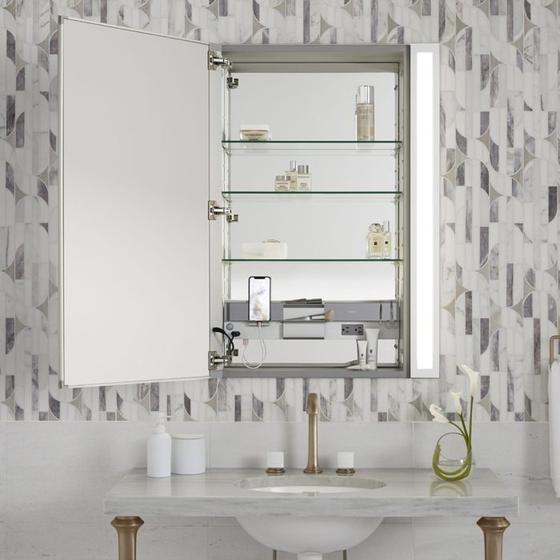
Robern M Series Medicine Cabinet
Recessed, mirrored inside, interior LED that comes on when the door opens, GFCI outlets and USB inside, optional defogger and programmable night light. Medications and glasses at eye level, lit, behind a mirror — and the storage a wall-hung vanity gives up. Made in the USA.
Rachel’s medicine cabinet — close to a must with an open-underneath vanity

Kohler Composed Touchless
Kinesis sensor, 0.5 GPM, AC-powered, minimalist. Rachel’s top touchless faucet specification. No handle to grip, twist, or turn — which is the actual accessibility argument for touchless, and the one nobody makes. A wet, soapy, weak, or arthritic hand never has to operate anything.

Hansgrohe Finoris Single-Hole Faucet 230 with 2-Spray Pull-Out
Single-hole with 2-spray pull-out (stream + rinse). Easy rinsing for limited mobility. 1.2 GPM, hard water resistant.

Delamu Under-Sink Organizer
2-tier stackable pull-out organizer with movable dividers. Keeps medications, bathroom supplies, and kitchen items neatly accessible — no bending or rummaging. 2-pack for medicine cabinet or under-sink storage.
Best for: Medication organization, bathroom independence
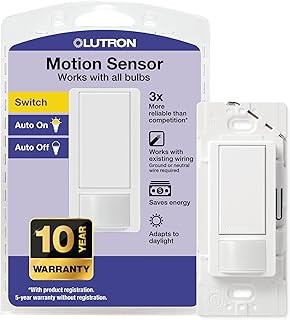
Lutron Maestro Occupancy Sensor
Auto-on, auto-off. Eliminates fumbling for switches in the dark. Non-negotiable for bathrooms and hallways.
For the rest of the room, see what an aging-in-place bathroom remodel costs, grab bars that don’t look institutional, and shower systems for accessible bathrooms.
Frequently asked questions
How high should a medicine cabinet be for aging in place?
Set it so the bottom shelf lands about 40 inches off the floor and the top shelf no higher than about 48 inches. Those numbers come from the ADA standards for public restrooms; they aren’t required at home but make daily items reachable standing or seated.
Is a recessed or surface-mounted medicine cabinet better?
Recessed. It sits nearly flush, so nothing projects over the sink where a head leans in, and it reads as a mirror rather than a box. Plan the opening before drywall, and keep it off exterior walls.
Should I store prescriptions in a bathroom medicine cabinet?
No. MedlinePlus advises against it because shower heat and moisture can damage medicines. Use the cabinet for glasses, skincare and grooming, and keep prescriptions in a cool, dry place such as a bedroom drawer or a locked pill dispenser.
Do medicine cabinets come with outlets inside?
Many high-end cabinets do. The Robern M Series can be ordered with electrical outlets and USB charging inside, so toothbrushes, razors and chargers stay plugged in and off the counter.
The design comes first
The medicine cabinet is the clearest example of how aging-in-place design should work. Nobody walking into the bathroom sees an accommodation. They see a beautiful mirror. Behind it, everything is lit, charged and within reach. That is the whole idea: the support is built in, and the room still looks like it belongs in a beautiful home.