How to Make Safety Feel Invisible
Disclosure: Well Aging Home participates in affiliate programs. If you buy through our links, we may earn a small commission at no extra cost to you.
The goal of aging-in-place design is not to make a home look safe. It is to make a home be safe, in a way that requires no announcement. The best implementations of accessible design are invisible: a home that functions better in every way, where the safety features are indistinguishable from the design choices. This is achievable. It requires intention, but it does not require compromise.
The Aesthetic Problem With Most Safety Products
Most products marketed as senior-friendly or accessible are designed to signal their function first and look second. The round plastic grab bar that announces its presence on a white tile wall. The bright yellow non-slip mat that turns a bathroom floor into a safety zone sign. The clunky bed rail that turns a bedroom into a care facility. These products solve one problem while creating another: they make the home feel like a different place, and not a better one.
How Invisibility Is Achieved
The principle is straightforward: choose products and features that would make sense in any well-designed home, regardless of age or ability. If a feature reads as a design choice first and a safety feature second, it has succeeded. If it reads the other way, it has failed.
Grab Bars That Belong
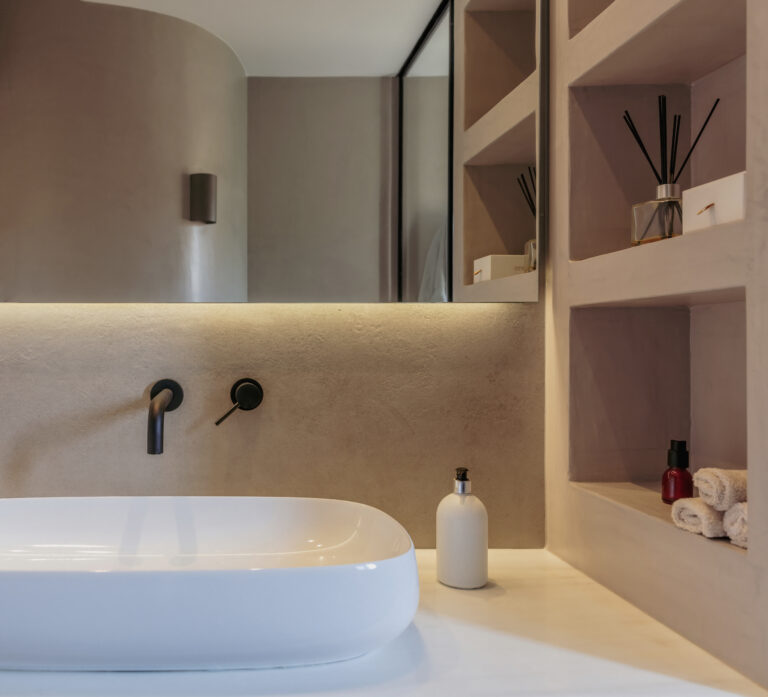
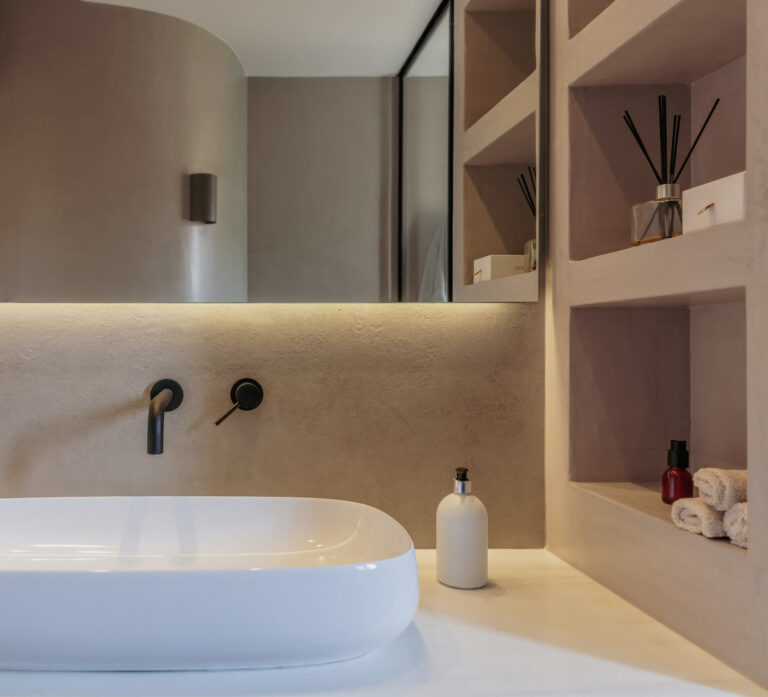
A grab bar in unlacquered brass or matte black, at 1.25 inches in diameter, mounted at the height where a hand naturally falls when stepping into a shower, does not look like a grab bar. It looks like hardware. Rejuvenation, Waterworks, and Signature Hardware all make bars that could pass for towel bars to an uninformed observer. The mounting matters as much as the finish: installed into blocking at the right position, a grab bar looks as though it was always meant to be there.
Floor Texture, Not Mats
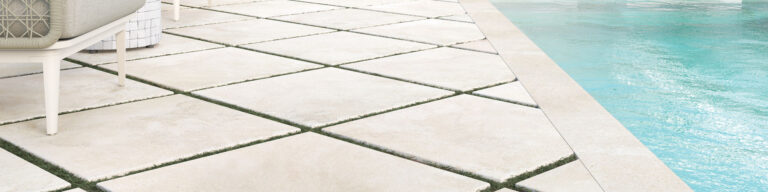
Non-slip mats are a visible intervention. Non-slip flooring is not. A honed stone floor, a textured matte tile, a low-pile rug with a quality gripper pad underneath: these provide equivalent slip resistance without announcing the reason. The goal is to eliminate the hazard at the material level, before a product needs to compensate for it.
Lighting That Works Automatically
Motion-activated lighting at floor level, programmable stair lighting, and smart lights that activate along a path at night do their safety work silently. A guest staying in your home would use the bathroom in the middle of the night without tripping, and might not notice that the lights came on automatically. That is the design ideal: invisible function.
Hardware Choices That Need No Explanation
Lever door handles, D-ring cabinet pulls, rocker light switches instead of toggles, single-handle faucets: every one of these is preferable to its alternative on pure design and ergonomic grounds. They require less grip, less force, and less precision. They also look better. No guest or family member needs to know these were chosen partly for accessibility; they simply encounter a home where everything is easy to use.
The Power of Built-In
The most successful aging-in-place features are built in rather than added on. Blocking behind bathroom walls so grab bars can be installed anywhere without demolition. A curbless shower threshold that never needs a ramp. A first-floor primary bedroom suite that needs no modification. Pull-out cabinet shelves that replace fixed shelving. These are decisions made at construction or renovation that become invisible the moment the project is complete.
What This Requires
Making safety invisible requires thinking ahead. It requires choosing the right finish, the right height, the right product category before a need becomes urgent. But the investment pays forward in a home that functions better for every person who lives in it, at every stage of their life, without ever looking like it was designed for a specific limitation. That is the goal, and it is fully achievable.