The MedaCube: What Worked, What Didn’t, and Who It’s Actually Right For
I ordered the MedaCube with real hope. Between my grandmother’s prescriptions and my own daily protocol of about fourteen items a day, medication and supplement management is a genuine, ongoing logistics problem in our house, and a device that removes the guesswork of “did I already take that” is exactly the kind of quiet, background-disappearing design I look for in every room I specify. I want to tell you honestly how it went, because an honest answer is more useful to you than a glowing one, and because this page exists to build trust, not spend it.
The short version: the MedaCube is a genuinely well-engineered device, and it was not the right fit for our medication list. I ended up returning it. I still think it deserves a fair, detailed review, because the reasons it didn’t work for us are specific and worth knowing before you spend the money, and because it may still be the right answer for a different list than ours.
What the MedaCube Actually Does Well
I want to describe this the way I’d write a spec sheet for a client, because that’s genuinely how I evaluated it before bringing one into the house.
Capacity and loading
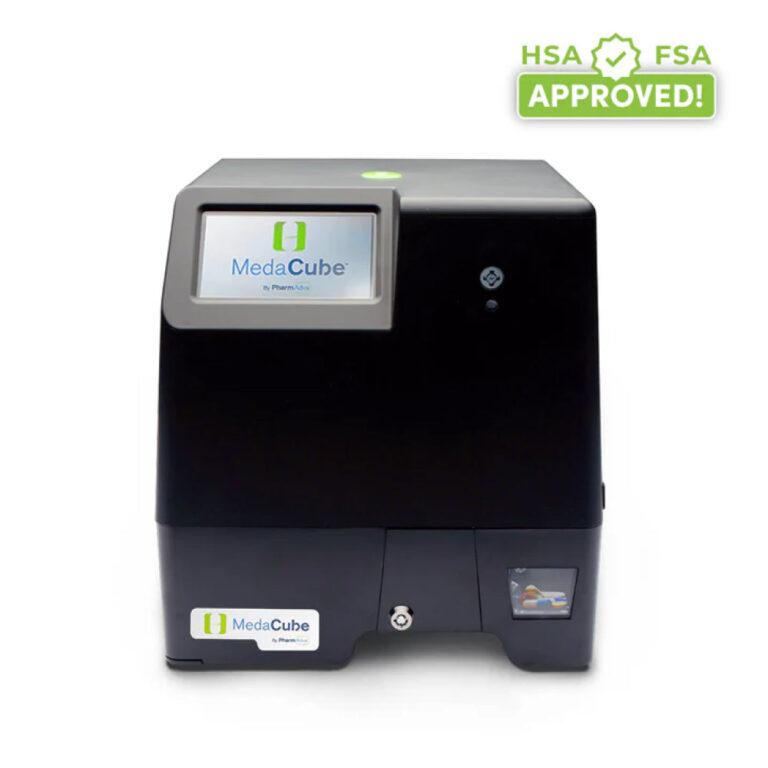
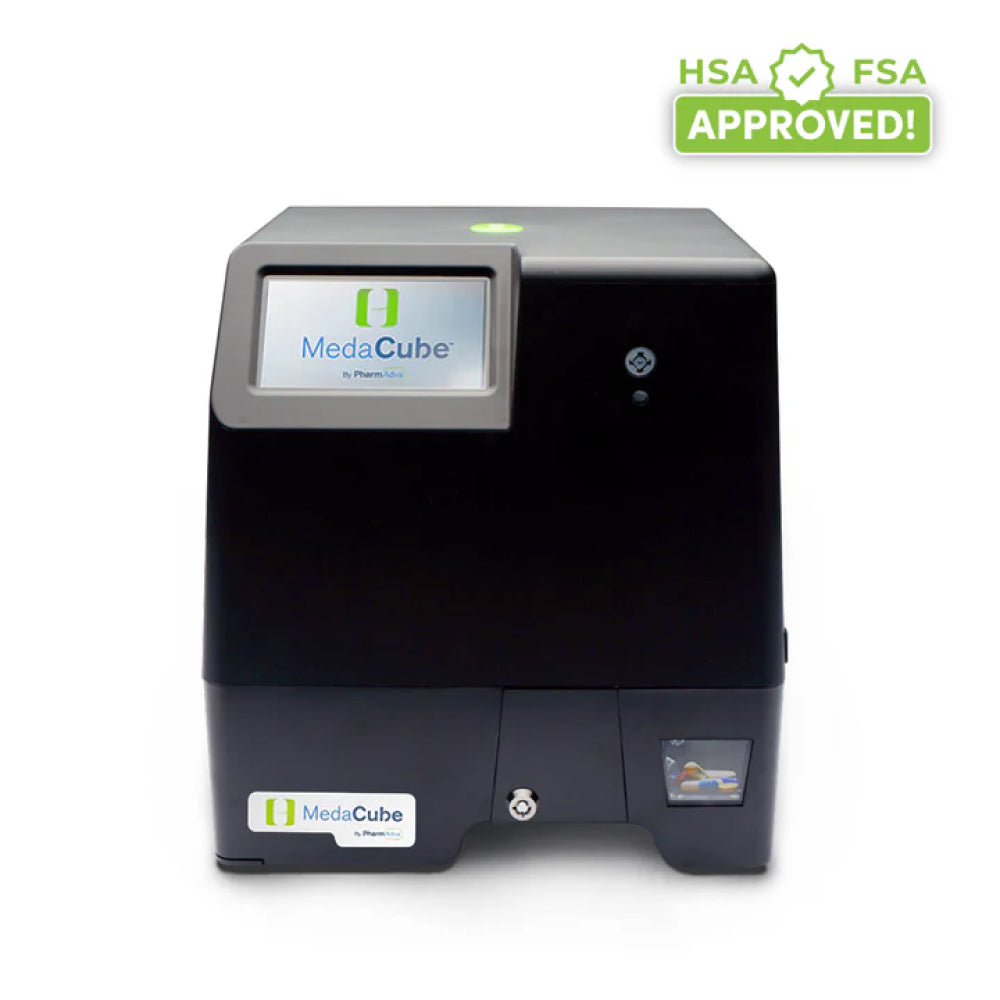
The MedaCube 2.0 is built to hold up to a 90-day supply across 16 different medications, loaded in bulk rather than day by day. In principle, that’s the difference between a five-minute monthly task and a nightly chore. Each compartment stays covered and sealed between dispenses, so pills aren’t sitting exposed to air, light, or curious grandchildren.
How dispensing works
At the scheduled time, the unit prompts with a screen alert and a voice reminder. A drawer pops open holding that dose, you tip it into your hand, and push the drawer closed. No sorting, no second-guessing whether the morning pills were already taken. The device decides, on schedule, without anyone having to remember.
Pricing structure
The MedaCube is sold as a one-time purchase, with free shipping and no required monthly subscription for standard support. That’s a real point in its favor. A lot of comparable connected medical devices lock you into a recurring fee indefinitely; this one doesn’t. MedaCube also offers an optional extended two-year warranty if you’d rather have added coverage built in from the start. It’s not a small purchase, and I won’t pretend otherwise. The company states it is the only dispenser clinically shown to raise medication adherence to 97 percent. That is MedaCube’s own published clinical data, not a measurement of our results, and I don’t think it would be honest to imply otherwise.
Where It Fell Short For Us
Our combined medication and supplement list includes several very small pills and capsules, some hardly bigger than a grain of rice, alongside larger tablets. In practice, the dispensing mechanism struggled to reliably pick up and release the smallest pills. More than once a dose came through only partially, or not at all, which is the opposite of what you want from a device whose entire job is dependable timing.
The bigger issue was capacity. Once you count supplements alongside prescriptions, we’re managing roughly fourteen items a day, many of them larger tablets. The compartments couldn’t hold enough of the bulkier pills to get us through a reasonable stretch between refills, which meant more frequent reloading than the “five-minute monthly task” the design is meant to deliver, not less. For a shorter list, or one made up of fewer, larger, more uniform pills, that math likely works fine. For a list like ours, it didn’t, and after several weeks of troubleshooting, I sent it back.
Who I’d Still Recommend It For
None of this makes the MedaCube a bad product; it makes it a product with a specific operating range, the same way I’d say a beautiful floating vanity isn’t the right choice for every bathroom. I’d still recommend it for an aging parent who is largely independent but forgetful, managing a moderate number of prescriptions in standard pill or capsule sizes, or physically limited by arthritis or low vision. It’s well suited to households where an adult child lives at a distance and needs real visibility without being intrusive, and to anyone who would rather pay once than commit to a subscription indefinitely.
Where I’d pause, beyond our own experience: for someone in the moderate-to-late stages of dementia, a device alone isn’t a substitute for a person. The MedaCube can prompt and dispense, but it can’t confirm someone actually swallowed the pill in their hand, and a confused user may not respond reliably to a screen alert at all. In that situation, it works best as one layer in a broader care plan that still includes in-person or remote human check-ins, not as a replacement for them. And if your list runs heavy on very small pills or a high pill count the way ours does, I’d test your specific medications against the compartment sizes before committing, not after.
How It Compares: Hero and Philips Medication Dispensing Service
I looked seriously at two other well-known options before deciding.
Hero is subscription-only, starting around $29.99 a month on an annual prepay plan and running up to roughly $59.99 a month with no commitment, which includes the device, app, and lifetime warranty. It holds up to 10 medications in-device with additional tracking through the app, and dispensing is button-activated rather than drawer-based. It’s a solid, more accessible entry point if a large upfront cost isn’t workable, though over several years the subscription can add up to more than the MedaCube’s one-time price.
Philips Medication Dispensing Service takes a different, more service-heavy approach: a locked countertop dispenser paired with pharmacy pre-sorted medication cassettes and a 24/7 monitoring center, typically running somewhere in the $75 to $100-plus range monthly. It removes loading entirely from the family’s plate, which is appealing, but it depends on your pharmacy participating in their cassette program, and you’re paying for that convenience indefinitely.
All three are legitimate, well-built approaches to the same problem. Which one is right depends less on brand and more on your specific pill count, pill sizes, and whether you’d rather pay once or subscribe.
What I’d Tell You Before You Buy
If I could go back, I would count our actual daily pill and supplement volume, including the smallest items, and check it against the compartment specifications before ordering, rather than after. I’d also call MedaCube’s support line directly and ask, specifically, how the device handles very small pills and high daily counts, since that’s exactly where ours ran into trouble. For a shorter or simpler list than ours, I still think this device could disappear into the background the way good design should. For ours, it didn’t, and I’d rather tell you that plainly than let a clinical statistic stand in for an experience that wasn’t quite that.