Aging in Place Interior Designer, St. Louis
An interior designer’s approach to a home that works from age one to one hundred — written from fifteen years of practice and from caring for my own parents since December 2016.
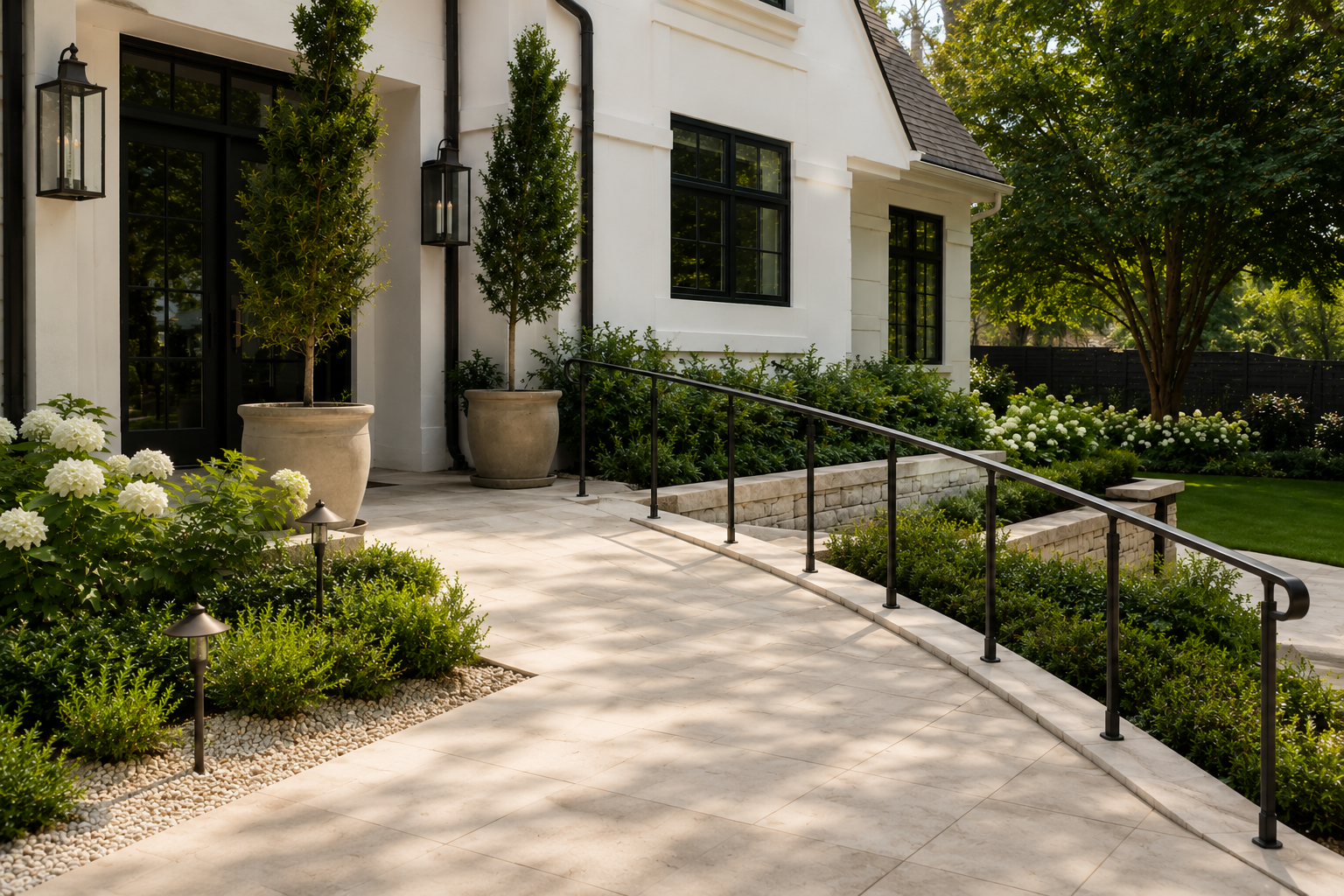
Aging-in-place work usually happens after a discharge timeline, with a minimal insurance budget set up so you can marginally make do with what you have in about ten days.
What gets recommended comes from an occupational therapist with zero time to spend thinking about your life. So I ended up with a hospital bed in the dining room, and because there’s no full bath on the main floor, a commode beside it. And a ramp made of wood, cheaply and quickly, so a wheelchair could get into the home.
Nobody in the hospital system is paid to think about how people and families can thrive in that home afterward. That’s the part I am good at.
I’m an interior designer — fifteen years of practice, work published in House Beautiful, Martha Stewart, Livingetc, and California Home+Design. The aging-in-place knowledge comes from somewhere else. My mother had a stroke in December 2016, and I’ve been caring for both my parents ever since, in a split-level house with stairs in five different locations.
Early on I installed a used stair lift I found on Craigslist. She almost never used it. She just stopped going upstairs. The expensive obvious answer is rarely the one that moves the needle.
A house should work from age 1 to 100
A curbless shower serves a toddler, a pregnant woman, someone on crutches for six weeks, and a ninety-year-old equally well. Lever handles are easier for a four-year-old and for arthritic hands alike. Lighting that comes on by itself helps everyone carrying groceries in the dark. That’s universal design, and it’s what all of us should be doing as a matter of course.
Built this way, nothing reads as an accommodation. Retrofitting in a hurry after a hospital discharge costs more and looks like what it is.
Renovation isn’t always the answer
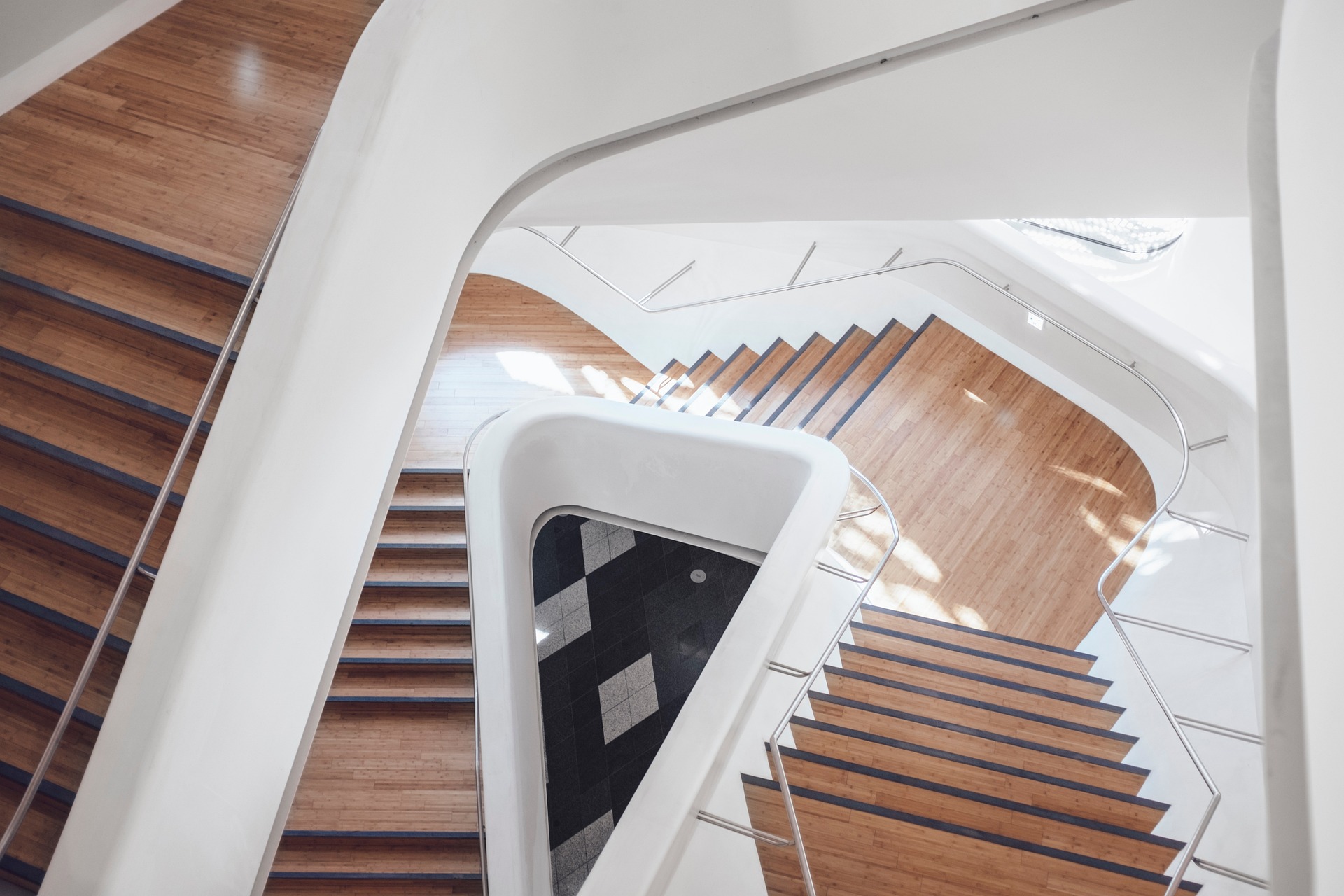
The center-hall colonials and Tudors in Ladue, Clayton, Webster Groves, and Kirkwood were built in the 1920s and ’30s: narrow stairwells, a small original bath upstairs, often no full bath on the main floor at all. These are architecturally significant houses, and a contractor’s fix — a bump-out here, a stock vanity there — visibly damages what makes them worth what they’re worth. I’ve written the full specification guide for aging-in-place bathrooms, with the dimensions and product tiers for a house like this.
When something tragic happens to a family member, instead of retrofitting I would recommend looking into assisted living facilities and moving to a place that is more ADA accessible. Often a spacious condo with amenities will suit much better than living through a renovation. If you do need to renovate, hire a good architect who can make the work look like it was architecturally supposed to be there the whole time, and make sure the finishes are selected by an interior architect or interior designer who understands and can design to ADA (the Americans with Disabilities Act).
The winter

Six months a year, the most dangerous part of a Missouri house isn’t the bathroom — it’s the front steps. Black ice on driveways and walkways, dark by five o’clock from November on. What I specify: Volt exterior lighting set from dusk to dawn; where needed, deck post lighting or illuminated handrails such as the Wagner LumenRail; and surfaces chosen for traction wet, not dry. All of it sits in the full recommendation list.
Sometimes the answer is a renovation — a tub-to-curbless-shower conversion, a widened (and ideally heightened, for better proportion) doorway, an improved bathroom. More often the first step is knowing what is best and makes the most sense.
Working together
I’m caring for my own parents full time, so I take on very few projects right now. If there’s a specific problem in your house you’re trying to solve, email hello@wellaginghome.com and tell me about it. I’ll tell you honestly whether I’m the right person for it and whether I have room.
Every Chapter.
My room-by-room guide to a home that works from age one to one hundred, covering the entry, kitchen, bath, bedroom, living spaces, outdoors, and smart home. Nine design principles and the products I specify for my own family. Most of what’s in it costs less than the stair lift I didn’t need.
Send me the free guideServing Greater St. Louis — Ladue, Clayton, Frontenac, Town and Country, Creve Coeur, Des Peres, Chesterfield, Wildwood, Kirkwood, and Webster Groves. Consultations are virtual, so location is flexible.