The Bathroom Safety Mistake I See in Every “Accessible” Renovation
I’ve walked into a lot of bathrooms labeled “accessible” — updated for aging in place, remodeled after a fall, renovated with the best intentions. And almost every one of them has the same problem: a suction cup grab bar, mounted as an afterthought near the tub or shower, standing in for real support.
It looks like a solution. It is not one. And the gap between the two is where people get hurt.
How Suction Cups Actually Fail
Suction cups work by creating a pressure differential against a smooth surface. The problem is that this seal degrades — through temperature changes, soap residue, slight surface irregularities, tile grout lines, textured tile, humidity, and simply time. A suction cup that holds firm when you test it on Monday may release silently on Thursday.
The failure doesn’t announce itself. The bar releases mid-transfer, when a person’s full weight is already committed to it. Falls caused by suction cup grab bar failures are among the most dangerous bathroom injuries precisely because the person is in a vulnerable position when it happens — leaning in, shifting weight, trusting the bar to hold.
No suction cup device is rated for the load-bearing demands of a true fall-prevention grab bar. The ratings that exist are for static pulls in ideal conditions, not for the dynamic, off-angle forces that occur in a real bathroom transfer. A properly installed wall-mounted grab bar is rated to hold 250–500 pounds in the directions that matter. A suction cup is not in the same category of product.
The Institutional Design Myth
The reason so many families choose suction cups isn’t because they believe they’re safer — it’s because they don’t want grab bars. Not the standard chrome hospital-style bars they picture. The reasoning goes: we’ll use suction cups until we have to do something more permanent, and we’ll delay the something more permanent as long as possible.
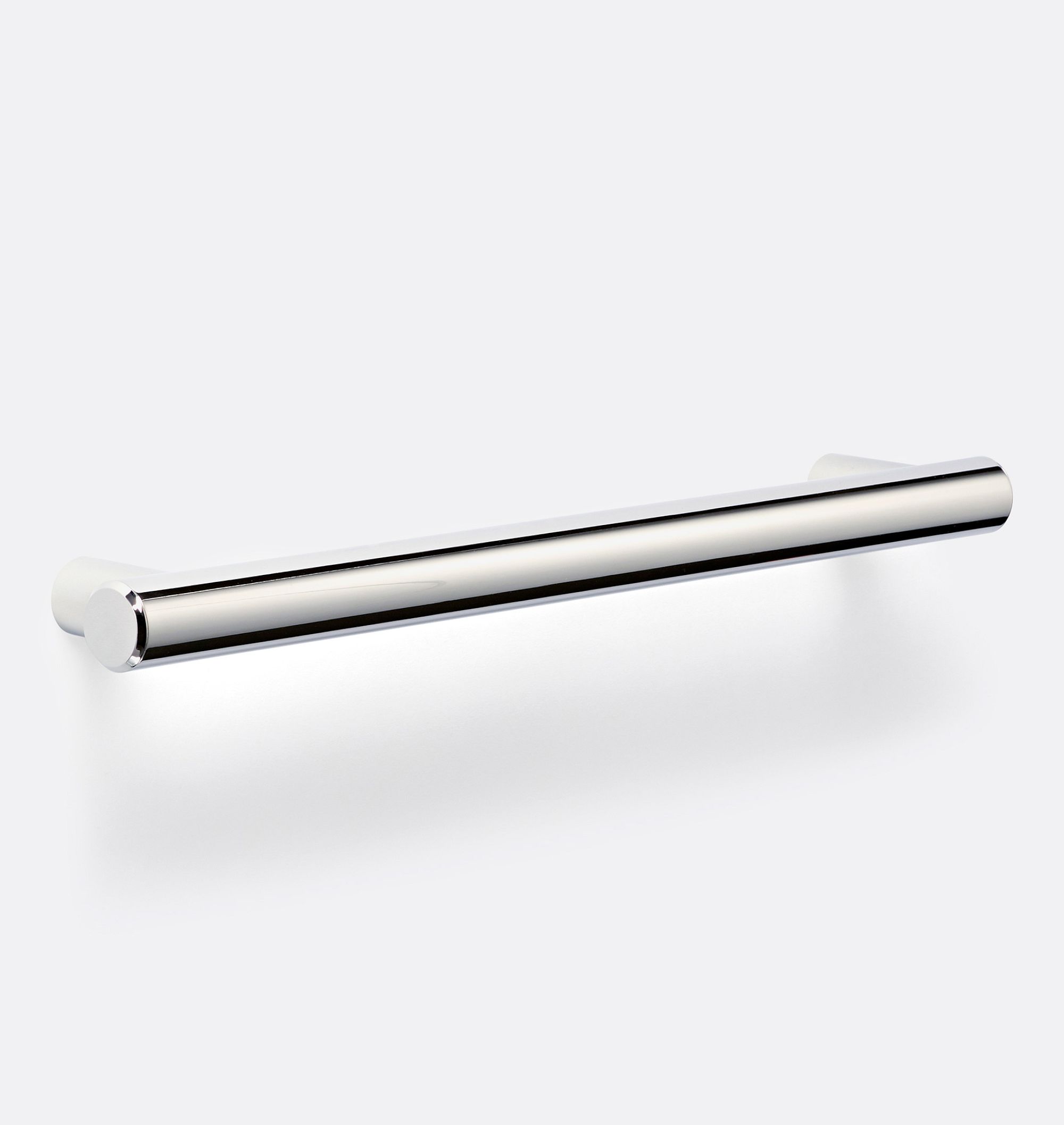
This is the problem I’ve spent a decade trying to solve. There is no reason a properly installed grab bar has to look medical. The Rejuvenation Tiburon Round Grab Bar — the one I specify most often — is architecturally indistinguishable from high-end towel hardware. It exceeds ADA load ratings. It comes in every finish that matters. It looks like it belongs in a bathroom featured in Architectural Digest. A guest would never know it’s a grab bar.
When design is no longer the objection, suction cups stop making sense entirely.
What Proper Installation Actually Requires
A wall-mounted grab bar must be anchored into wall studs or into blocking — solid wood installed specifically to support the bar load. This is standard for any competent handyman or contractor, and in many markets, total installation cost for a single bar runs $150–$300 including hardware. For a bathroom with three well-placed bars (shower, toilet approach, tub), the total project cost is typically $500–$900.
Compare that to the cost of an emergency room visit, a hip surgery, or a rehabilitation stay. The math is not close.
For rentals or situations where wall installation is genuinely impossible, there are freestanding grab bar systems — floor-to-ceiling tension poles and toilet safety frames with real structural load ratings — that provide far better protection than suction cups. These are not the same product category.
Where to Put Grab Bars (The Placements That Matter Most)
Placement matters as much as the bar itself. The three highest-impact locations:
- Inside the shower: A horizontal bar at hip height on the wall you face, plus an angled bar on the entry wall for support during transfer in and out.
- At the toilet: One bar on the side wall at approximately seat height, angled slightly downward toward the front. This supports both sitting and standing transitions.
- At the tub: A vertical bar on the entry wall for step-in/step-out stability, plus a horizontal bar inside for seated stability.
For specific products — including designer options in unlacquered brass, matte black, and brushed nickel that look nothing like hospital hardware — visit the Well Aging Home Full Collection, where every grab bar listed meets ADA load requirements and has been personally specified in client projects.
Buy the real bars. Install them properly. Don’t compromise on the thing that’s actually holding someone up.